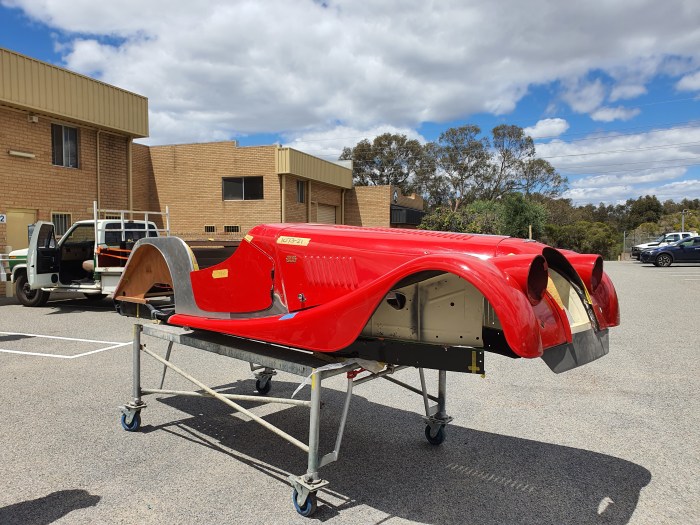
1976 Morgan 4/4 Roadster

When I began my traineeship as an artisan coach builder, I had the privilege of working on classic vehicles like the Morgan 4/4 Roadster.

Morgan – body & Panel repairs

One of the first steps in the repair process involved squaring and securing the timber body frame to the chassis. Then, the body panels were fitted to ensure proper alignment and functionality.

Body Frame Alignment

The vehicle was initially delivered without any attached parts, exposing the timber frame.

Body Panel Alignment

We fitted the rear quarter panel to determine the extent of the sill panel and the position of the rebate joint.

Panel Fabrication

Before commencement of repairs, we also trial fitted the lower section of the front cowl panel. Subsequently, we fabricated the sill panel section and integrated it with the front cowl panel.

Timber Rebate – Sill Panel

To ensure a seamless integration, we notched the timber body frame to allow for the smooth connection of the quarter panel and sill panel section.

Sill Panel Rebate

The quarter panel section was stepped to create a rebate that would overlap with the cowl panel (sill panel section) and provide a flush finish.

Sill Panel – Interface Joint

The finished joint between the cowl panel and the quarter panel (sill panel sections), as originally manufactured by Morgan.

Timber Rebate – Dovetail Section

We repeated the process by notching the timber body frame at the dovetail end to ensure the smooth integration of the quarter panel and dovetail panel.

Quarter Panel Rebate

The rear section of the quarter panel section was also stepped to create a rebate for the dovetail panel, resulting in a flush joint between the two sections.

Dovetail – Interface Joint

The finished joint between the dovetail section and the quarter panel.

Morgan – panel alignment

Once the repairs were complete, we performed a post fitment and alignment of the body panels on the Morgan. This step was crucial before proceeding with painting as it ensured uniform separation between the panels, eliminating the risk of binding or scuffing with adjacent panel sections.

Timber Frame Alterations

Before fitting and aligning the reproduction quarter panels, we made necessary alterations to the timber frame.

Front Panels

During the fitting of the front panels, we tweaked and laser-leveled the chassis to achieve improved gaps and alignment.

Front Fender

We carefully fitted and adjusted the fenders to ensure a consistent gap between adjacent panels.

Rear Quarter Panel

The rear quarter panels were installed along with the doors, and their contour was manipulated to create a uniform seal.

Rear Dovetail

We also manipulated the rear dovetail panel to fit the new timber frame.

Vehicle Body & Parts

The final result was a well-finished vehicle body with uniform gaps, achieved without forcing the parts into position.

Morgan – Repair Panels

Fortunately, for this particular vehicle, we had a limited number of repair panels to fabricate as the owner provided aftermarket quarter panels.

Cowl Panel – Sill Panel Sections

The new sill panel sections fabricated in house.

Front Valance Panel

Front valance panel was fabricated in house with a stainless steel wired edge.

New Quarter Panels – Supplied

Fortunately the customer was able to source the new fabricated quarter panels from the UK.

Morgan – Bespoke Panel Fabrication

When the vehicle initially came to us, it was missing two important panel sections—the front and rear valance panels. Upon its return, after having the mechanical items reinstalled, we fabricated and installed a bespoke center console.

Front Valance Panel

The Morgan did not have a front valance panel originally, but the owner wanted to add front lights without compromising the aesthetic. To achieve this, we replicated the design of the rear and fabricated a custom front valance panel.

Rear Valance Panel

For the rear valance panel, we used 1mm steel plate and reinforced the edge with wire encasement.

Bespoke Centre Console

Designing the center console was a meticulous task, considering the limited space available for the seats and the operation of the pedal assembly. We carefully crafted a center console that met these precise requirements.

Auto Resto

3/345 Victoria Road, Malaga Perth, Western Australia 6090

If you have any questions, let us know.

info@autoresto.com.au

Follow us

Copyrights all rights reserved © Zenzi Pty Ltd 2023
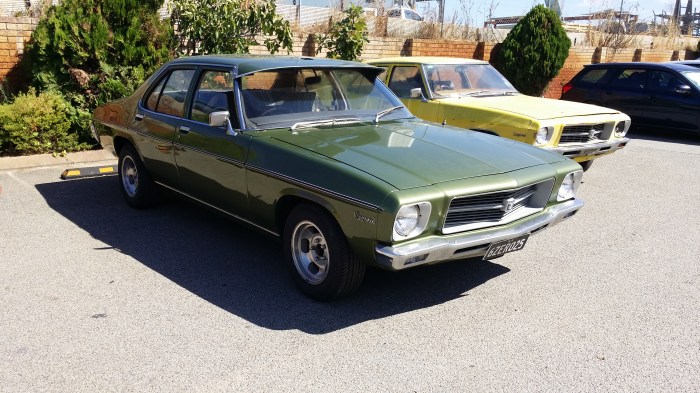
Holden HQ Sedan

Introduction

After serving faithfully for forty-six years, the Holden HQ Sedan, a symbol of automotive heritage, faced significant deterioration due to corrosion. This article delves into the consultation process at Auto Resto, assessment of the corrosion issues, and the tailored proposal to address the concerns presented to the prospective client.

Furthermore, it explores the risks posed and the unintended consequences of substandard repairs. Discover how Auto Resto’s process focuses on identifying the root cause and rebuilding the vehicle’s structure from the inside out.

In the case of this Holden HQ Sedan, consulting with our in-house experts who specialize in classic car restoration is essential. Auto Resto possess the knowledge and experience to evaluate the severity of corrosion issues in the vehicle. By leveraging on our expertise, you can gain valuable insights into the extent of the corrosion damage and make informed decisions about the necessary repairs.

The first step of the process is recognising the visible signs of deterioration and telltale indicators that may point to underlying corrosion issues. Rust spots and unsightly blemishes on the exterior, often serve as an early warning sign. Any paint bubbling, may also signal corrosion lurking beneath the surface.

The condition of the vehicle is assessed and a visual inspection performed to identify visible signs of corrosion damage. The potential risks and safety concerns associated with compromised structure are also noted.

For this Holden HQ Sedan, we identified critical areas like the cowl, A-pillars, floor pans, door hinges, and front windscreen prone to corrosion.

Although unknown to us at this stage, this section of the vehicle had been repaired (by others) on two separate occasions. The substandard repairs (presumably cost efficient), had compounded the problem, driving the corrosion deeper into the vehicle structure and inadvertently increasing our scope of work.

Our process involved exploring the root cause of the corrosion issues and restoring the structure by rebuilding it from the inside out.

RHS Front Windscreen Aperture

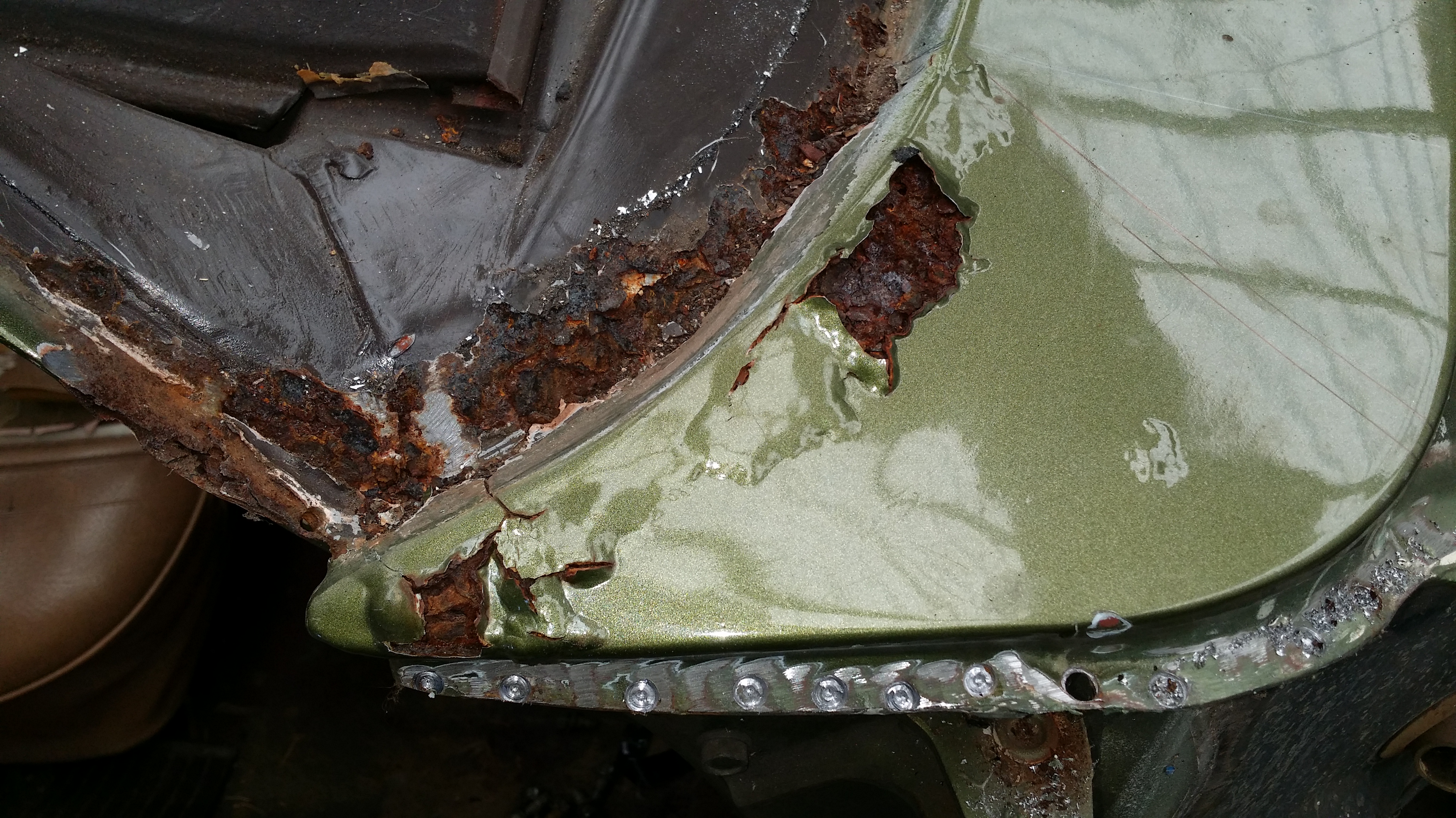
The photo below shows the condition of the right-hand side (RHS) of the dash after removing the front windscreen, revealing the extent of the deterioration.

20190327_123705.jpg

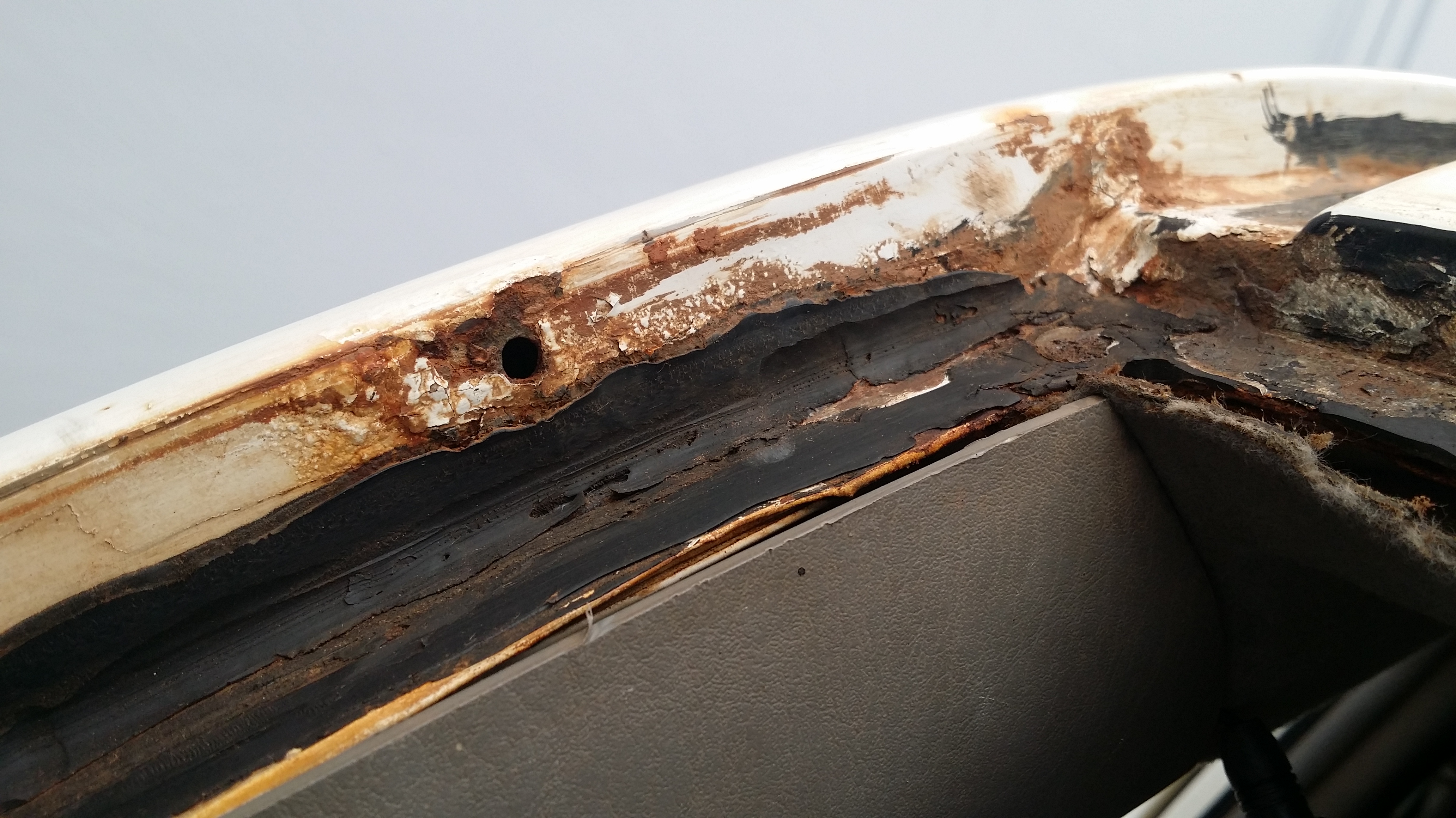
Over time, moisture trapped by silicon sealer and cosmetic repairs has penetrated into the metal structure of the dash panel. The damage is extensive, affecting not only the RHS windscreen pillar (aperture) but also the stainless steel windscreen trim fasteners.

The corrosion damage was so advanced that it has even reached the upper areas of the plenum chamber and A-Pillar structure. Which was not initially apparent was that the lower reaches of the plenum chamber have also been affected.

RHS Cowl Panel

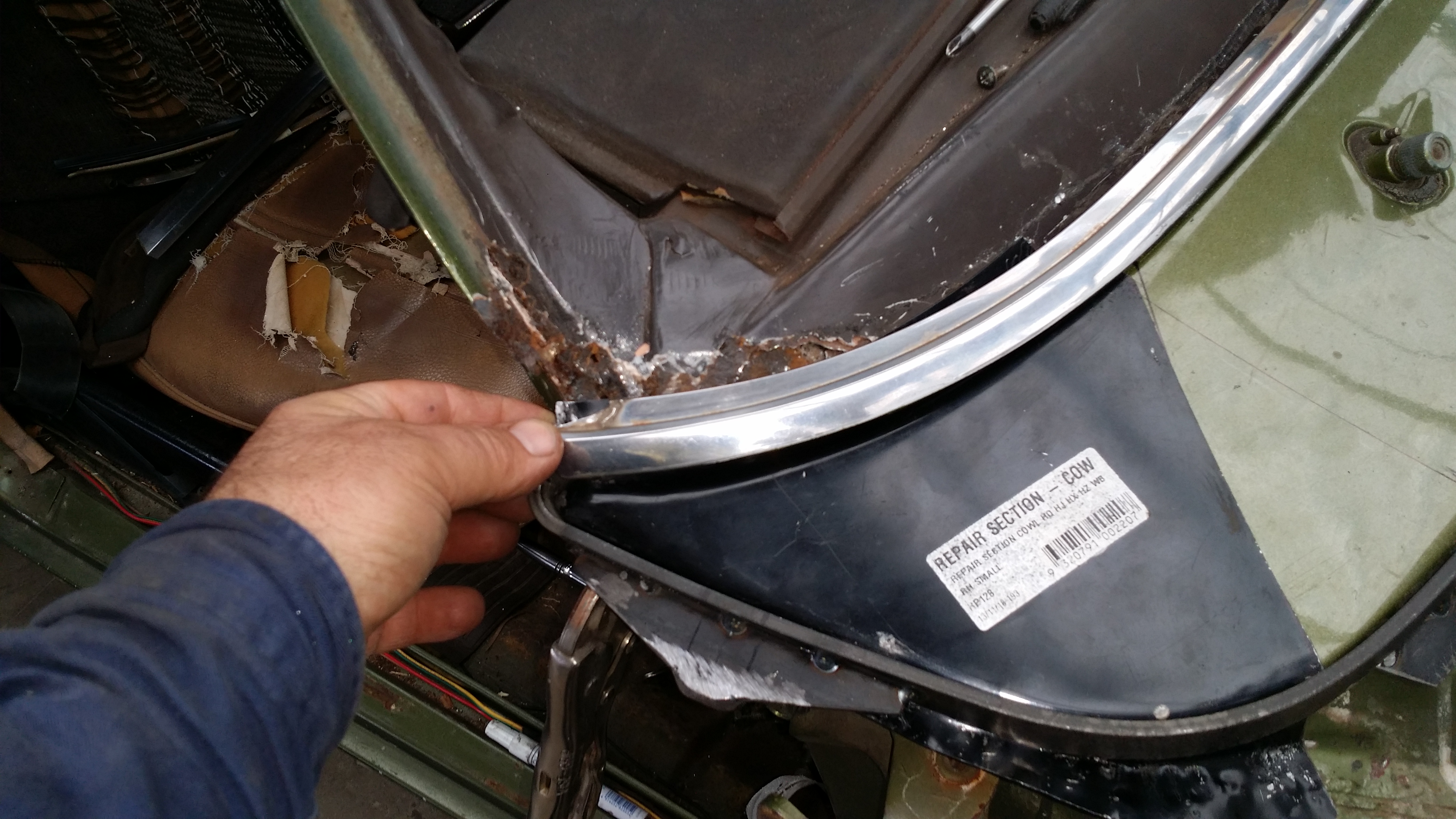
In the photo below, the owner-provided RHS replacement cowl panel is being fitted to the vehicle. While aligning the panel with the RHS door and fender, significant alterations were necessary to ensure proper alignment of the stainless steel windscreen trim.

20190331_143107.jpg

Following removing of the external cowl panel section, a substantial amount of debris and corrosion species were exposed. Clearing the debris revealed weakened and perforated panel sections caused by extensive corrosion.

This area forms the underlying structure of the cabin, consisting of multiple layers of overlapping panels. It serves as the juncture point for the RHS A-Pillar, plenum chamber, dash panel, and windscreen cowl panel.

RHS Windscreen Pillar / Door Aperture Section

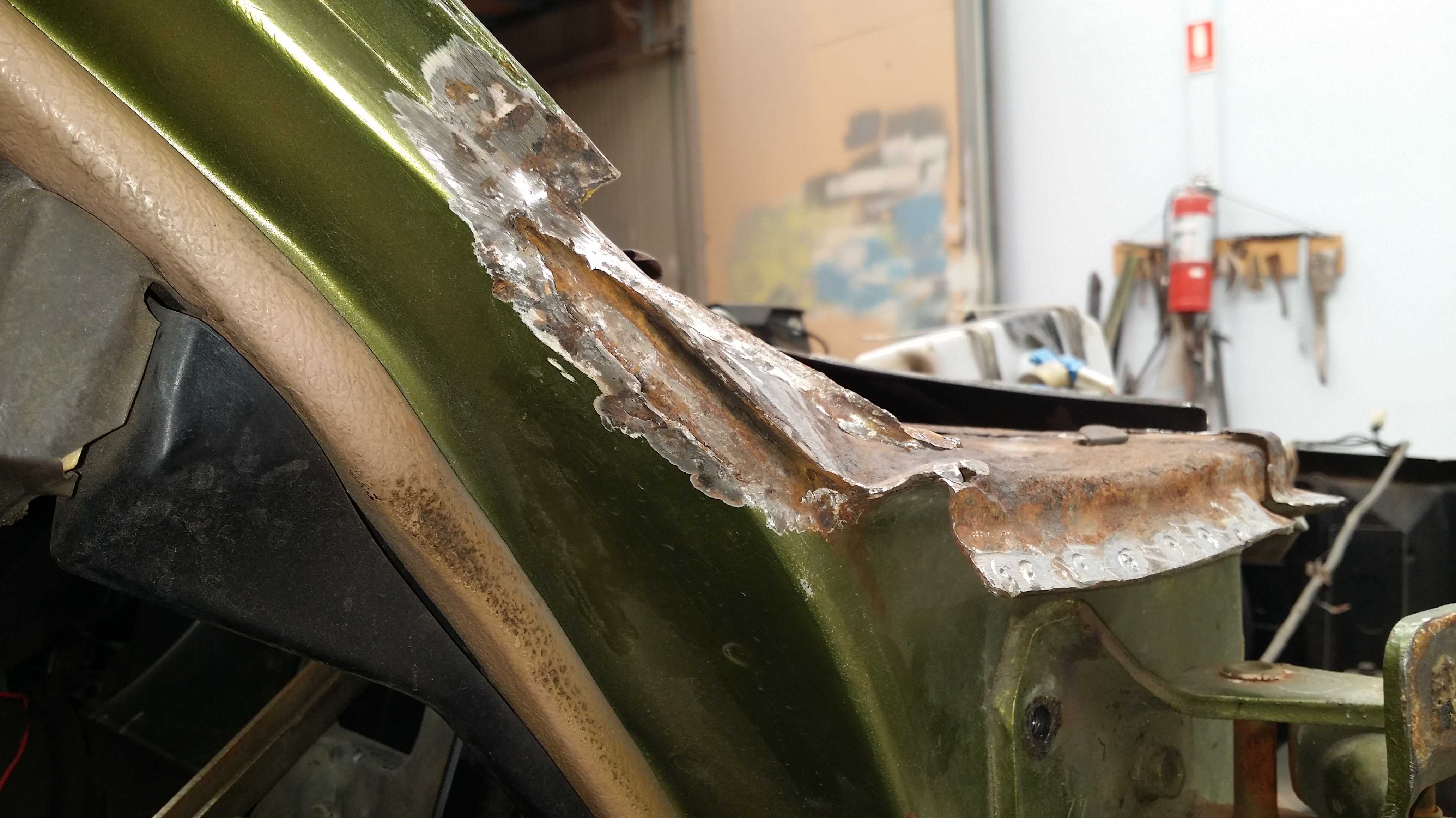
At first glance, this section appeared relatively solid, but closer inspection revealed hidden issues.

20190404_123757.jpg

In addition to the obvious missing lower section, a previous repairer had bronze-welded a patch on top and filled the void with plastic filler. Originally, this section consists of two layers (upper and lower sections) that form the structure.

Internal Cowl Panel Duct (plenum chamber)

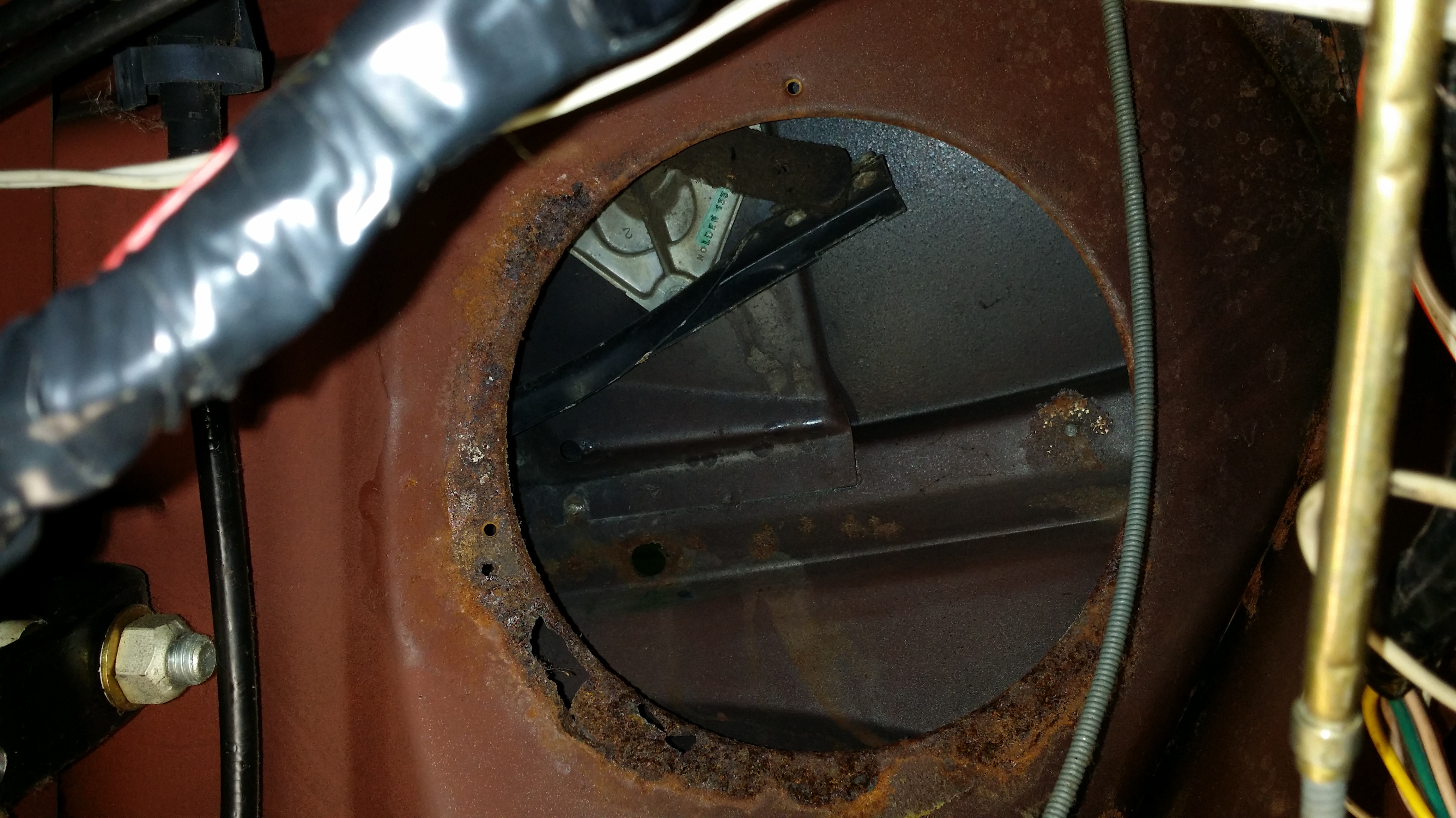
While removing the Internal Cowl Duct, we noticed corrosion embedded in the seal on the underside of the plenum chamber. The area where the cowl duct is fixed is shown in the photograph below. Accessing and repairing this area behind the dash was a  challenge.

20190401_203841.jpg

The only reliable solution to address this issue was to remove the entire external cowl panel, providing access to the plenum chamber. If left unrepaired, water ingress into the vehicle cabin could eventually lead to rusting of the floor pans.

Internal Corrosion Issues

Despite the progress made, there was one more surprise in store for us. The vehicle still had unresolved internal corrosion issues, which required further attention. To see the full video of the work completed, check out the title “Rust Repairs-Holden HQ Sedan.”

Rene Farrace

Toyota 100 Series – Front Windscreen

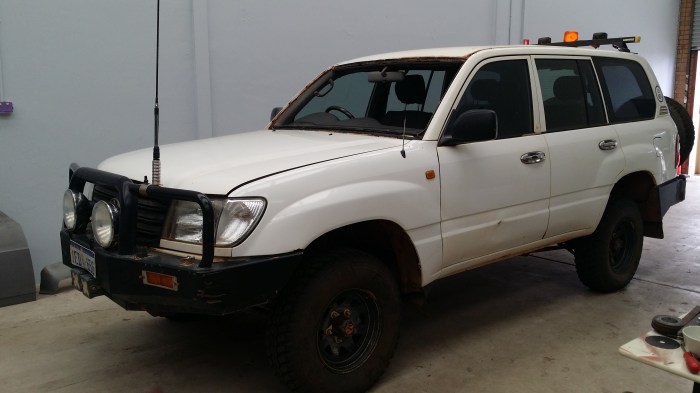
RE:     Toyota Landcruiser 100 Series –  Front Windscreen Aperture (Corrosion Repair)

This document has been prepared with photographic illustrations to highlight the severity of corrosion damage and the recourse of the repairs conducted.

1.0           Initial Inspection – 22/01/19

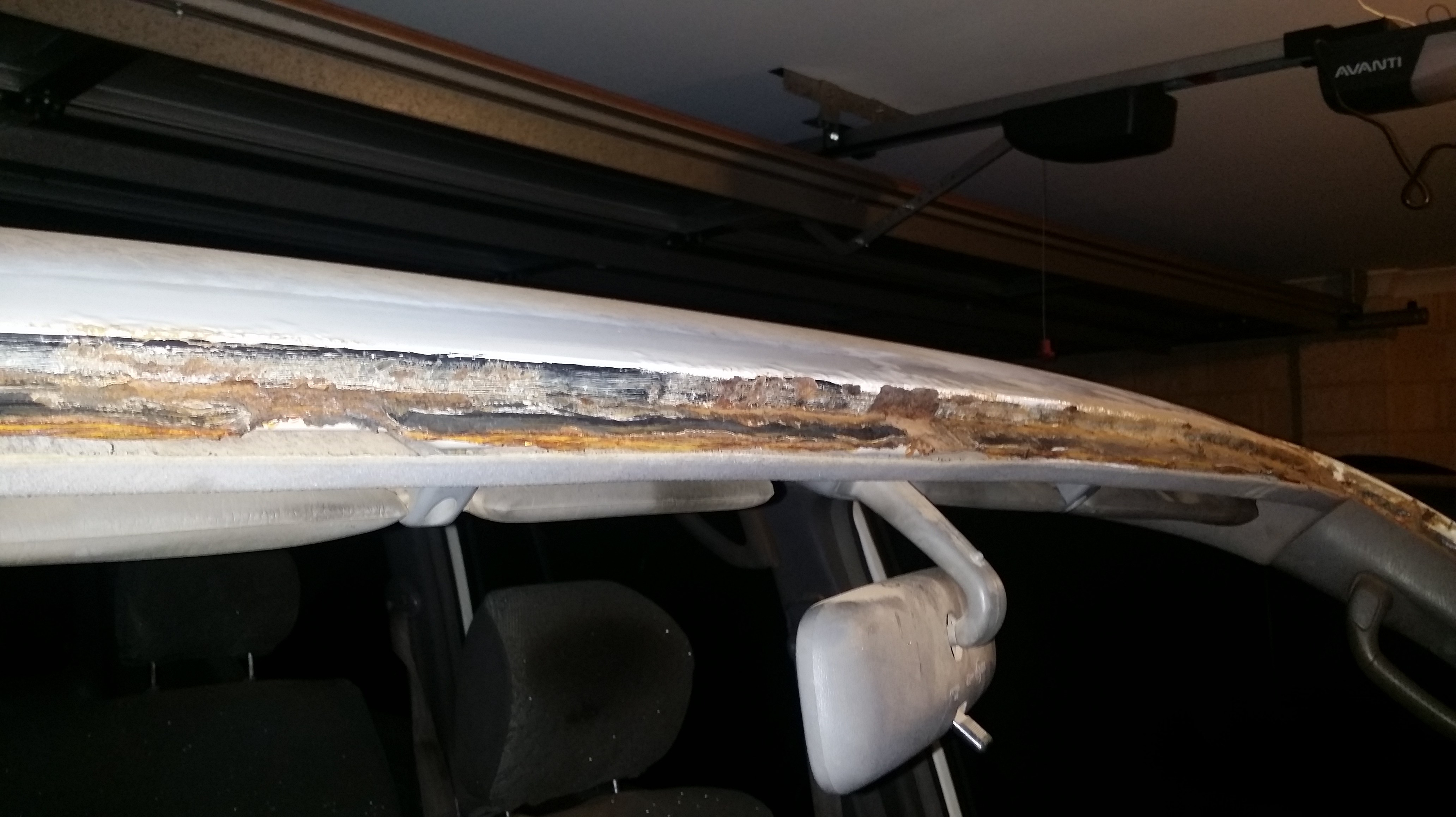
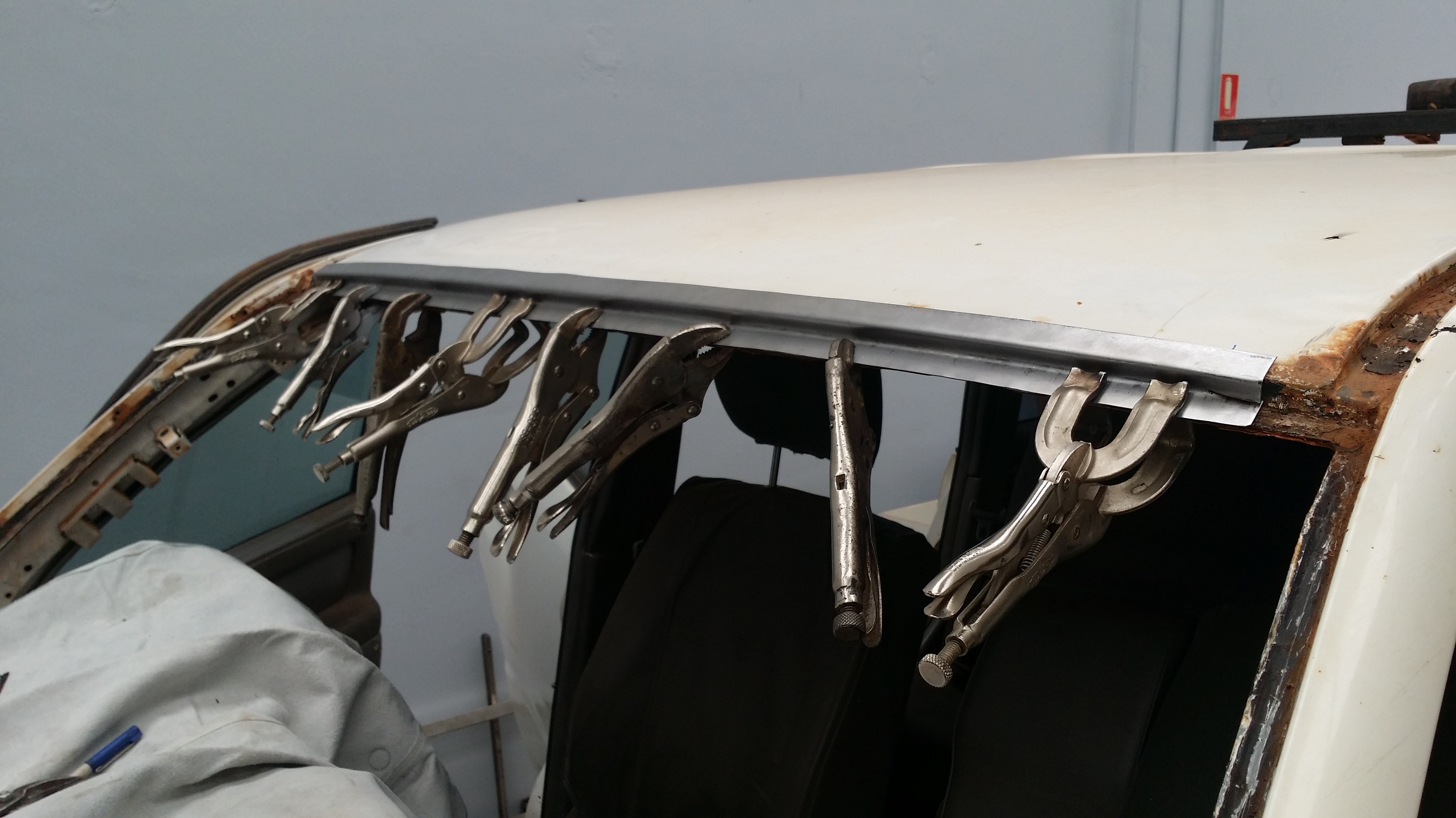
On the 22/01/19 @ 20:30pm, an assessment was carried out to determine the extent of vehicle damage and to enable an estimate for the repairs to be carried out at the clients residence. From the initial review, a preliminary rectification schedule was compiled and estimated (the basis of the repair scope and estimate was the use of lead filler and two metal plates to fill the large void areas). The photo below illustrates the conditions at which the assessment was carried out (at night and under insufficient lighting).

20190122_202650.jpg

2.0           Vehicle Review – 24/01/19

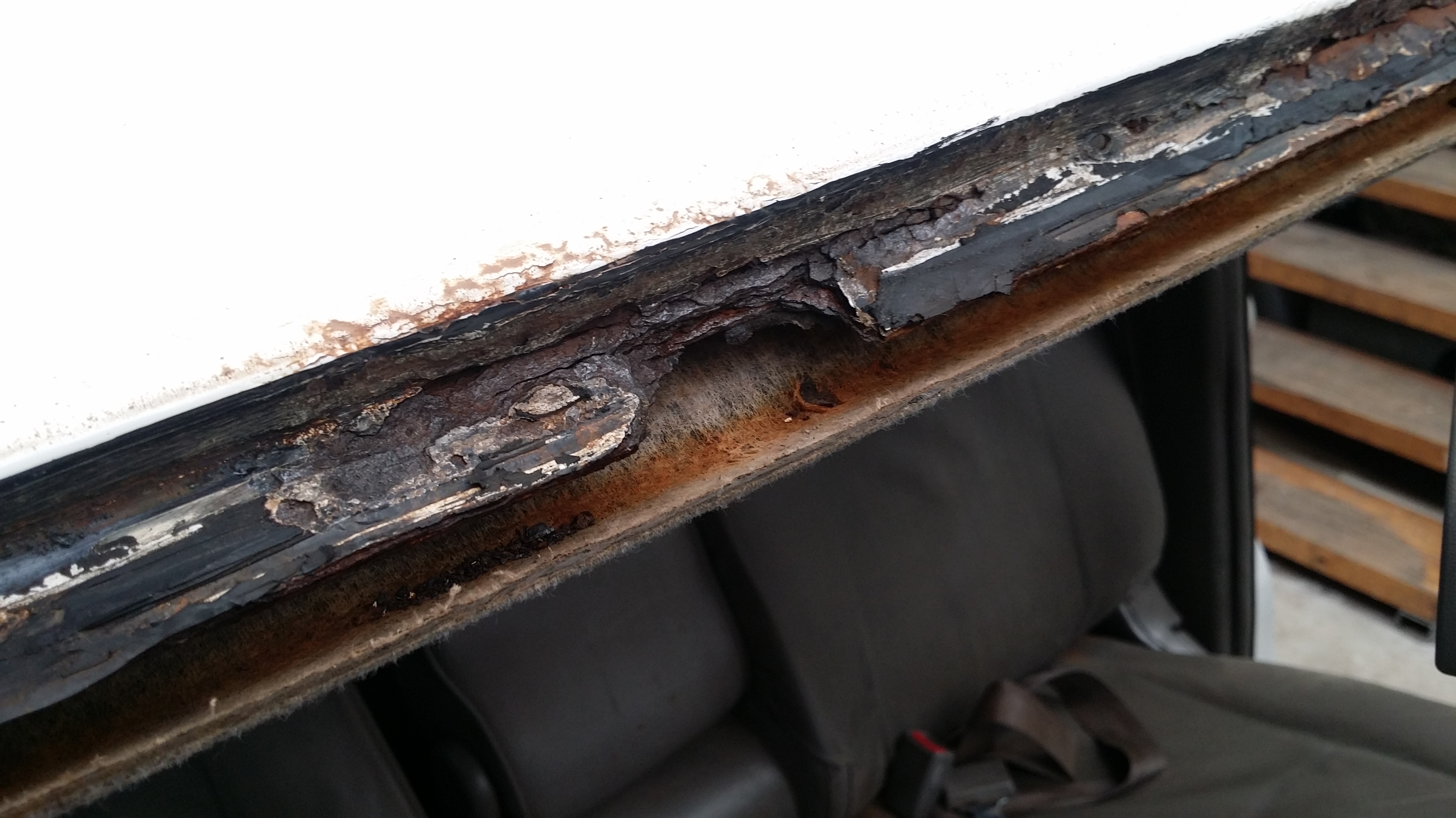
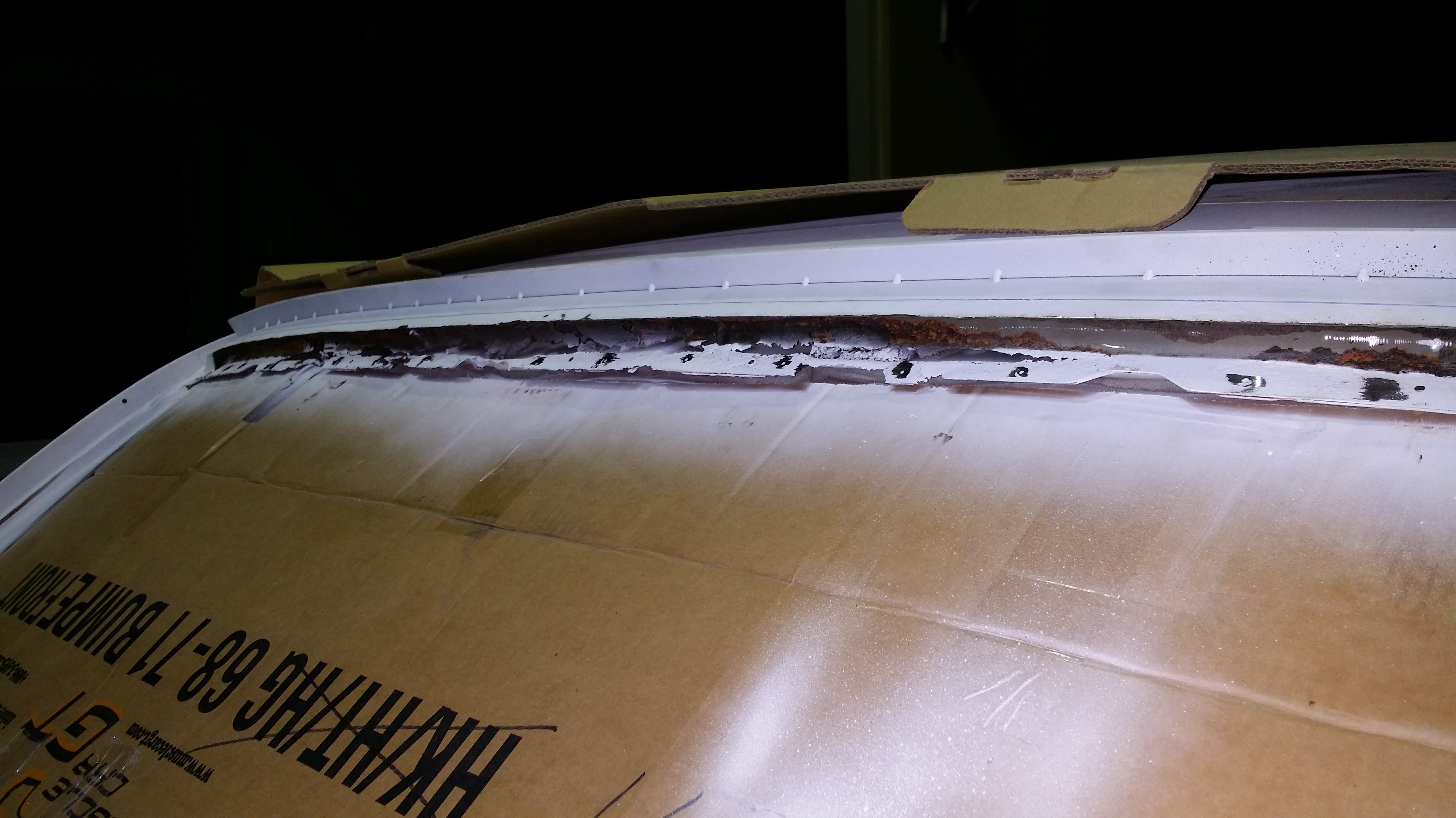
The vehicle was delivered to the workshop on the 24/01/19 at 09:30am. The vehicle was reassessed under better lighting conditions and the following observations were noted. The photograph below illustrates one of the void areas where the level of corrosion damage was more significant with the corrosion penetrating through multiple layers of the windscreen aperture.

3.jpg

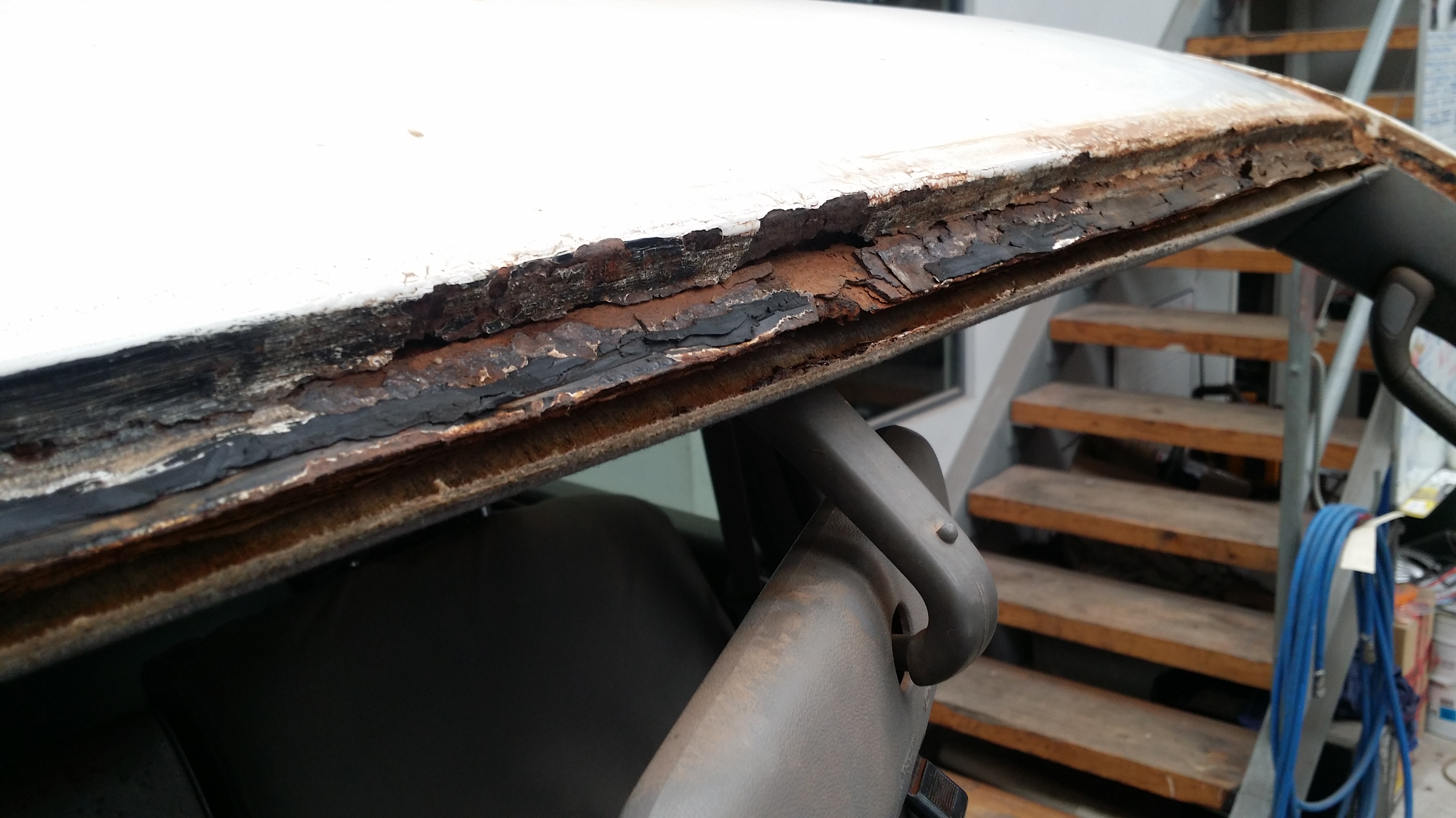
The second observation noted was that the outer turret skin had separated from the internal support frame. This is clearly visible by the horizontal fracture line of the full length of the windscreen aperture.

4.jpg

3.0           SCOPE OF WORK

From the condition review/reassessment conducted on Thursday 24/01/19, the following scope of work was conducted to meet the basic requirements of the repair and return the structural integrity to the panel section.

3.1                Turret Aperture

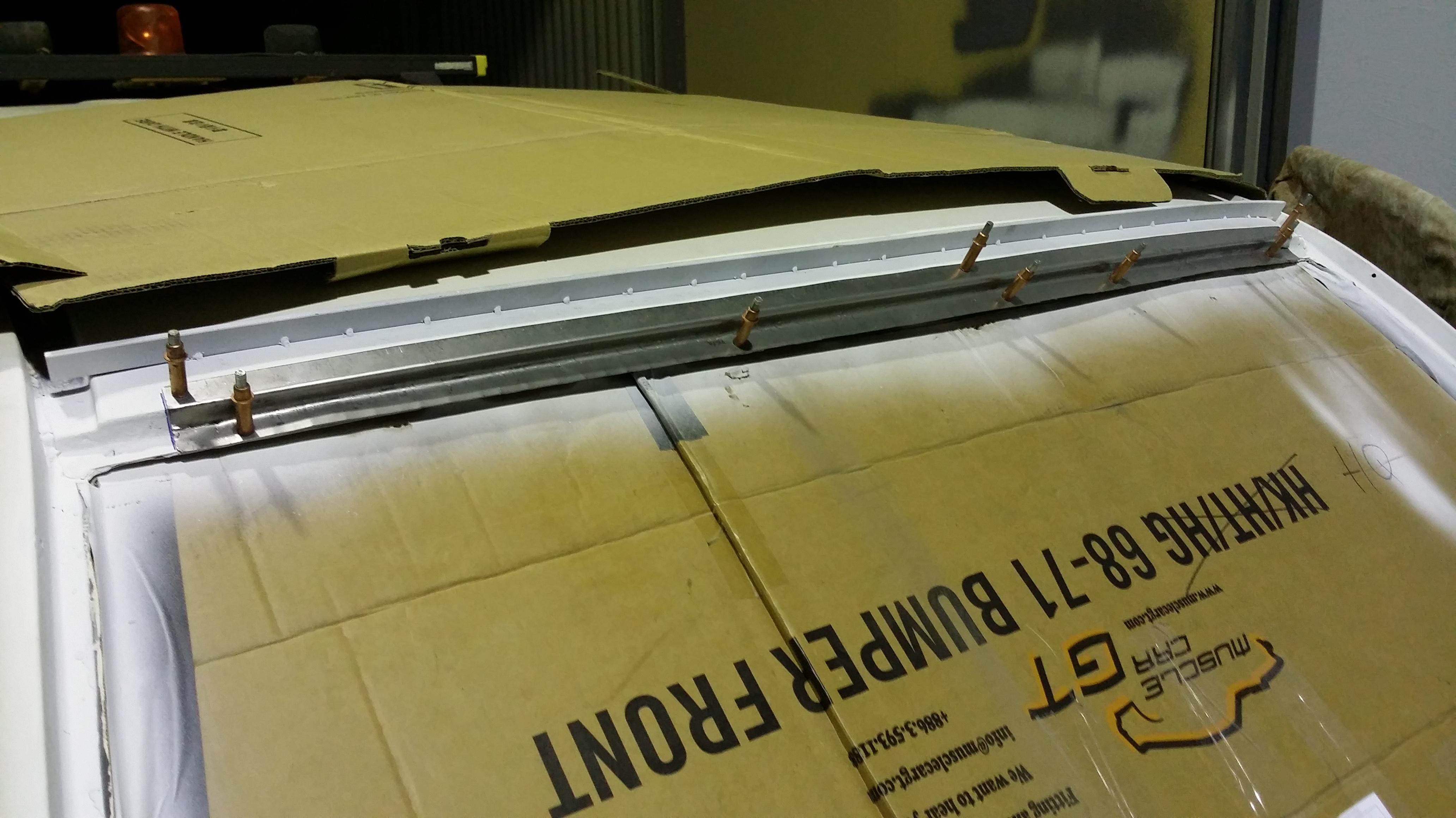
In light of the condition reassessment and scope requirements, a complete new panel section was fabricated to match the original profile. The fabricated panel was then trial fitted for the correct contour and alignment.

20190124_122641.jpg

Note: the multi-layers of corrosion build up beneath the aperture were obstructing the correct alignment of the replacement panel, so the complete lower lip of the aperture was removed.

10

Upon removal of the windscreen aperture section, the internal support frame was found to be weakened by the corrosion. The area was sandblasted to remove the corrosion contaminants and clean the metal surface ready for welding.

11

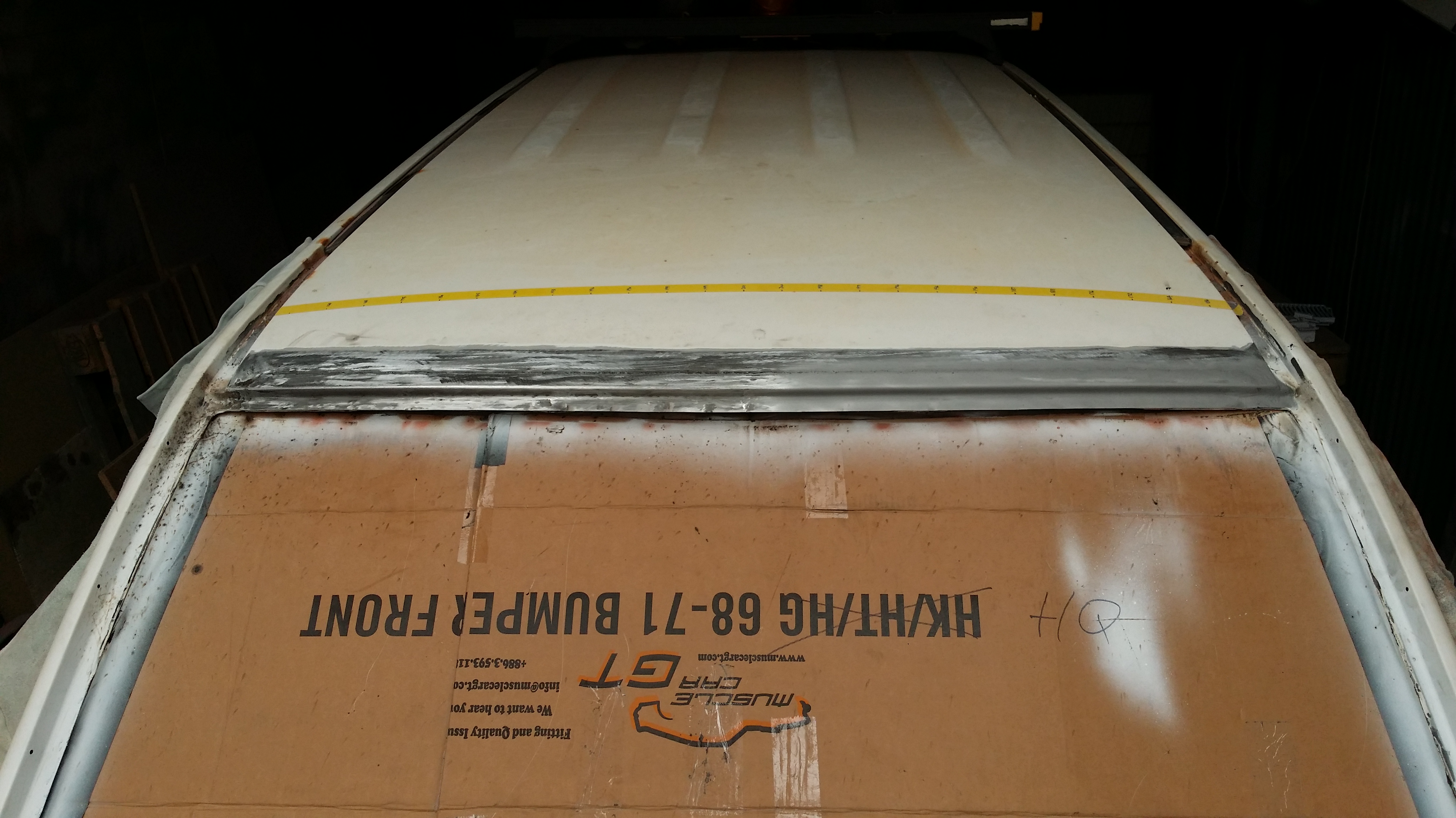
The panel replacement section was aligned and held in position by clecos and then fully welded.

12.jpg

3.2                Vertical Apertures

Both of the vertical apertures were found to have localised areas of corrosion around the perimeter of the (pillar trim) fixing holes.

7.jpg

The full lengths of both apertures were sandblasted to remove all of the corrosion contaminants.

4.0           Conclusion

20190131_101430[1].jpg

The remediation of the corroded turret section has been completed above the standard of the quoted repairs. The requirements have resulted in time/cost variations which we have absorb to preserve the integrity of our fixed price guarantee.

René Farrace

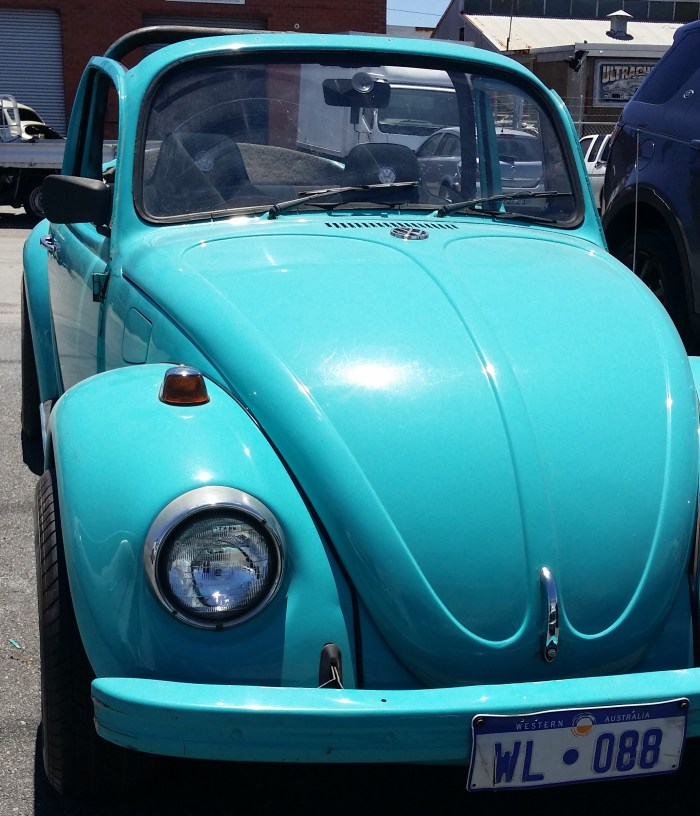
1964 VW Beetle Convertible

LHR Fender – Repair

This video illustrates the repair process on the rear fender of a VW Beetle Convertible.

The cracks that were visible in the fender panel were the result of a failed attempt to repair a vertical fracture. The extent of the damage was assessed and a new replacement panel was fabricated to the size required. The damaged area was then cut out completely the new replacement panel was aligned and fully welded.

1957 Chevrolet Bel Air

Rear C-Pillar Restoration

This Chevrolet BelAir had significant corrosion damage in both of the rear C-Pillar’s. The repair process involved the removal of interlocking panel sections which provide the structure. The surface was cleaned free of contaminants and etch primed. The sections removed were re-fabricated and the structure repaired from the inside out.


1965 Ford Mustang

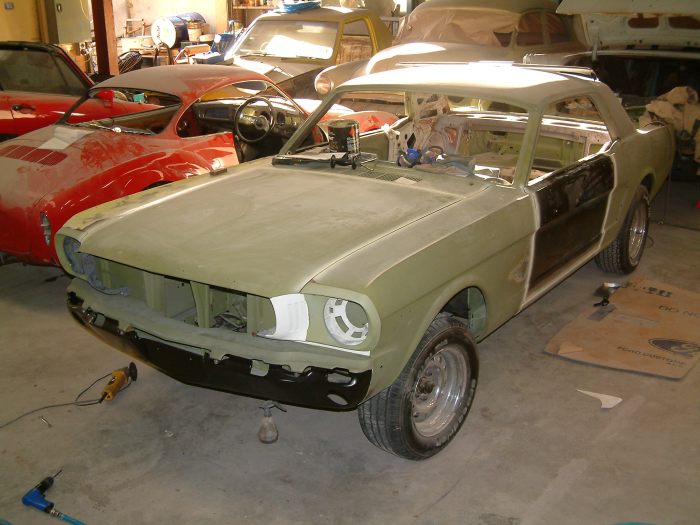
The photos illustrate the Ford Mustang firewall conversion to right hand side drive .

The old firewall was used as a pattern which was inverted, re-fabricated, aligned and fused welded in place. The process included the relocation of the heater box and the location of the inlet/outlet hoses.

The brake booster was then re- located and the firewall was recessed to provide clearance and the correct placement of the pedal assembly. The steering column was then aligned with a protrusion was made through the firewall and secured with a bespoke end plate.

The repairs were then sandblasted and etch primed to seal the metal surface from atmospheric conditions during the restoration process.

Holden EJ – Fender

Holden EJ – Fender
This fender belongs to an Holden EJ Ute.

Sometimes a clients budget needs to be staggered over time and we don’t always get to see the whole vehicle all at once.

This fender had some minor issues in the past which could have been repaired better by the other repairer. At first sight, the corrosion appeared to be concentrated at the lower rear section of the fender.

The fender was then sandblasted to remove the paint and corrosion contaminants.
After the blasting process, the fender was reassessed and we found that the upper rear section of the fender had a small concentration of corrosion perforations.

Rene created a pattern of the fender sections and then fabricated the complete external (rear section) and lower internal fenders sections.

The corroded internal & external fender sections were then cut out and the replicated panel sections were fuse welded in place.

This may seem to be an extreme approach, but at Auto Resto we warranty our rust repairs for 5 years. We are passionate about restoring vehicles and eliminating corrosion.

HR-Holden-Ute-rust-repairs-vehicle-restoration-auto-body-building-custom-fabrication-vintage-car-Farrace-restoration-A-Pillar-autoresto.com.au

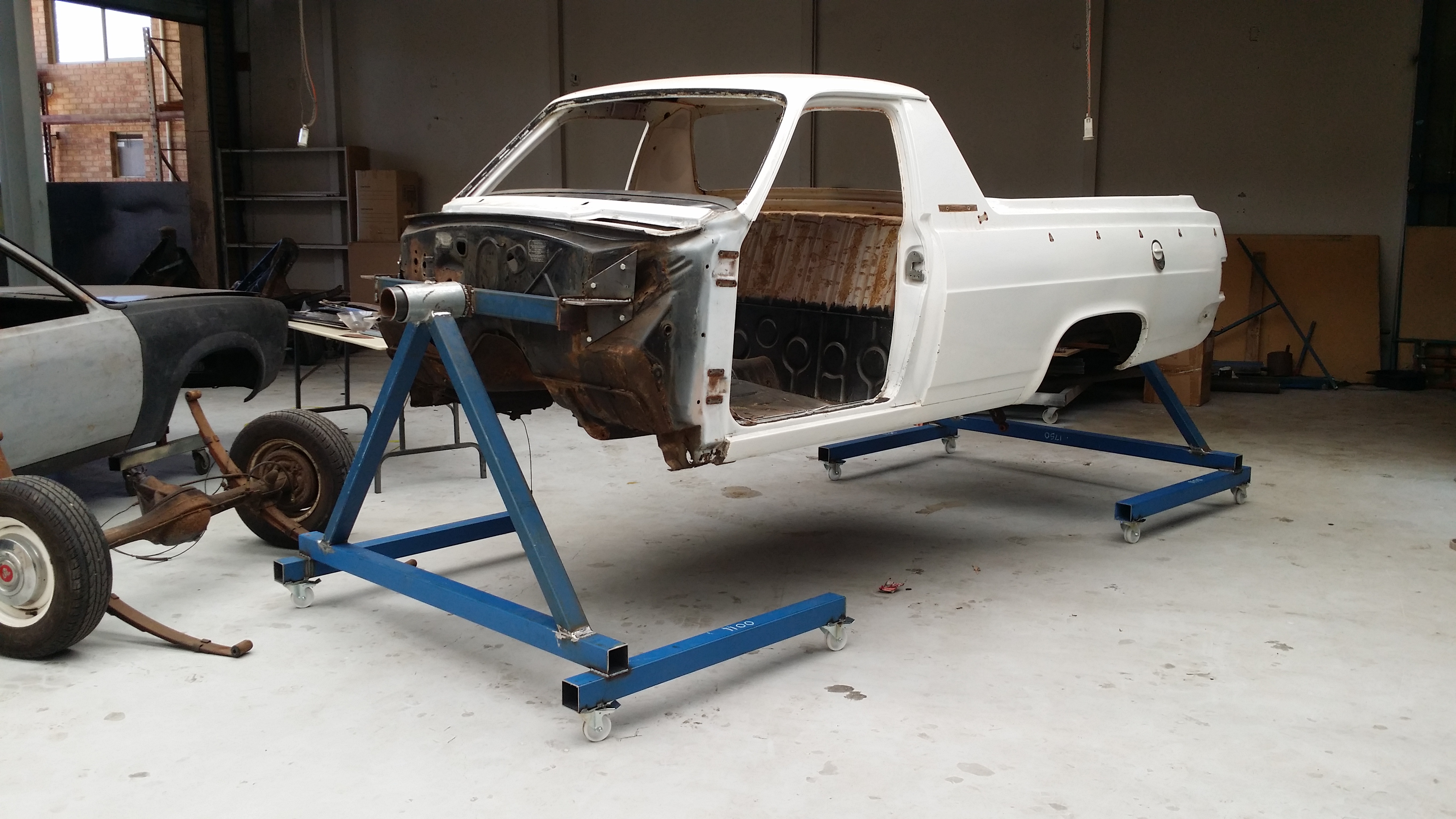
HR Ute (white)

HR-Holden-Ute-rust-repairs-vehicle-restoration-auto-body-building-custom-fabrication-vintage-car-Farrace-restoration-A-Pillar-autoresto.com.au

Buyer Beware

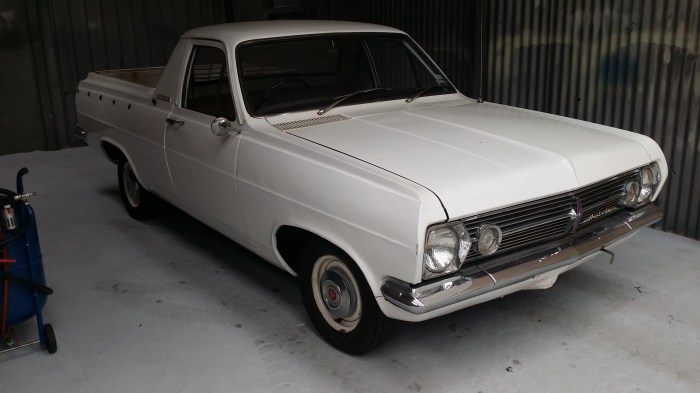
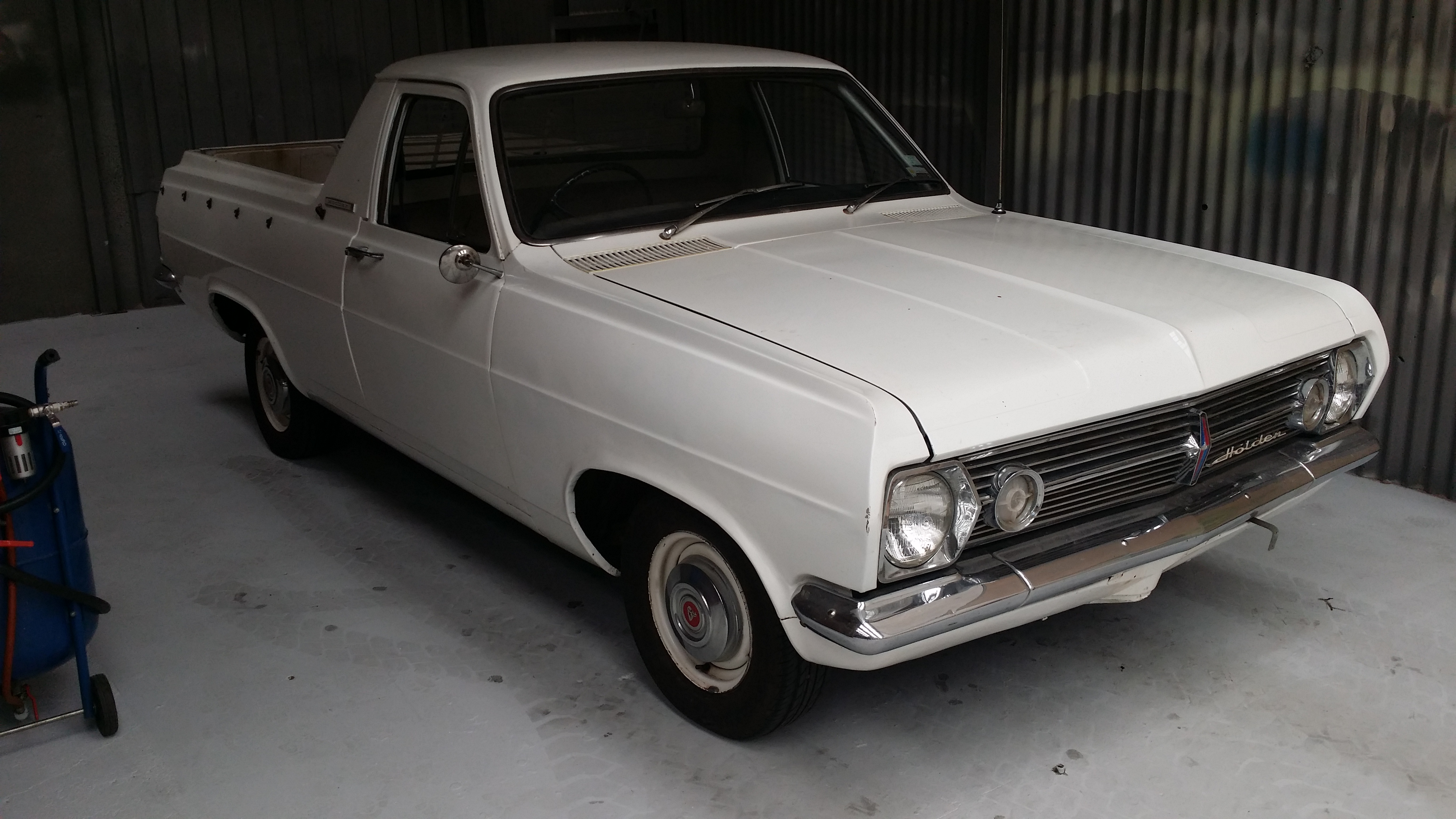
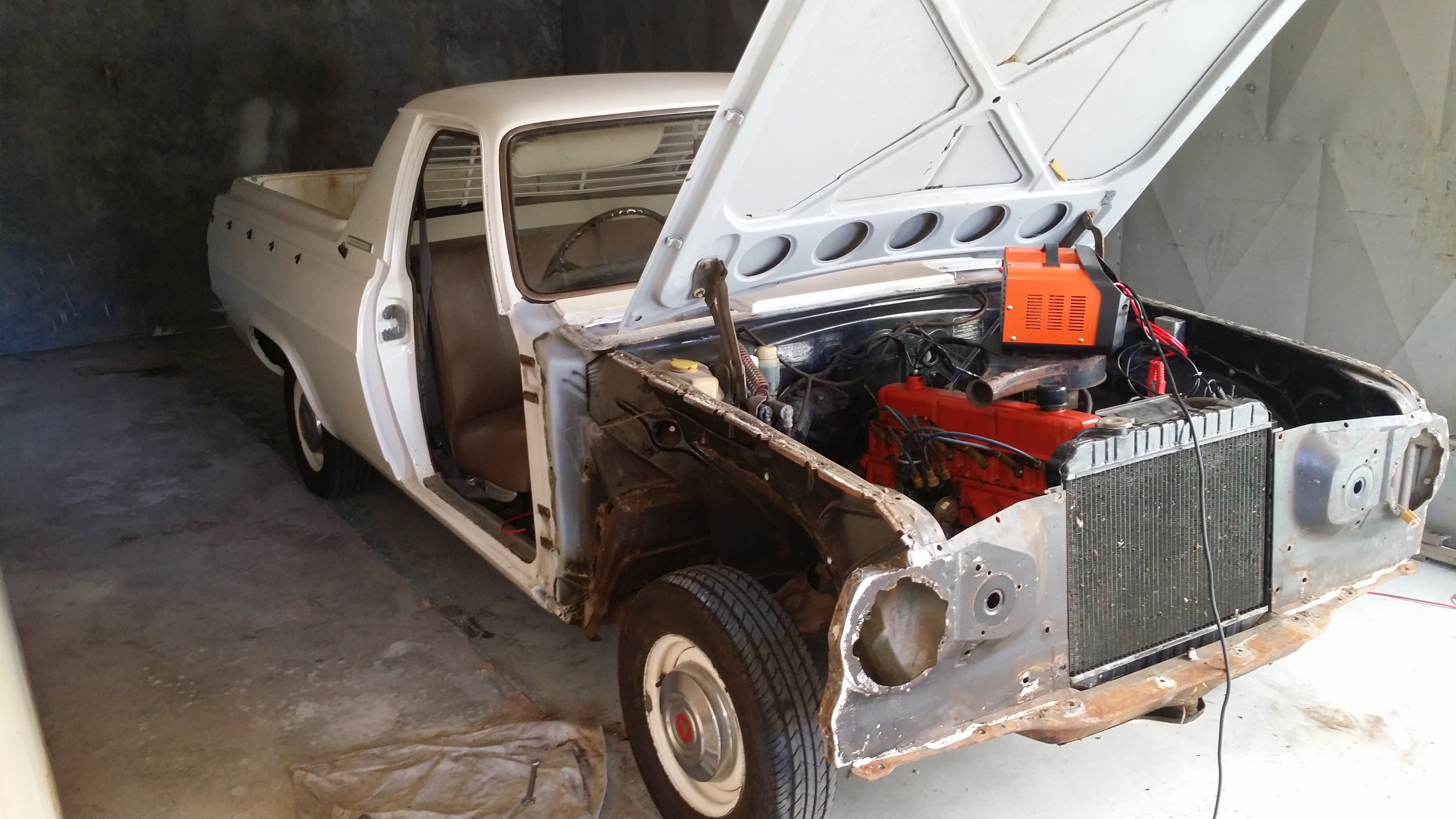
This Holden HR Ute was purchased as seen above with little knowledge of the underlying issues yet to be revealed. This vehicle was sold on a club licensed and when the new owner tried to re-register the vehicle it failed for good reasons.

Auto-Resto

Disassembly

The vehicle was then totally disassembled. Everything was remove from the vehicle, the interior, the windows, doors, fenders, headlights, grille, the front bumper.


Auto-Resto


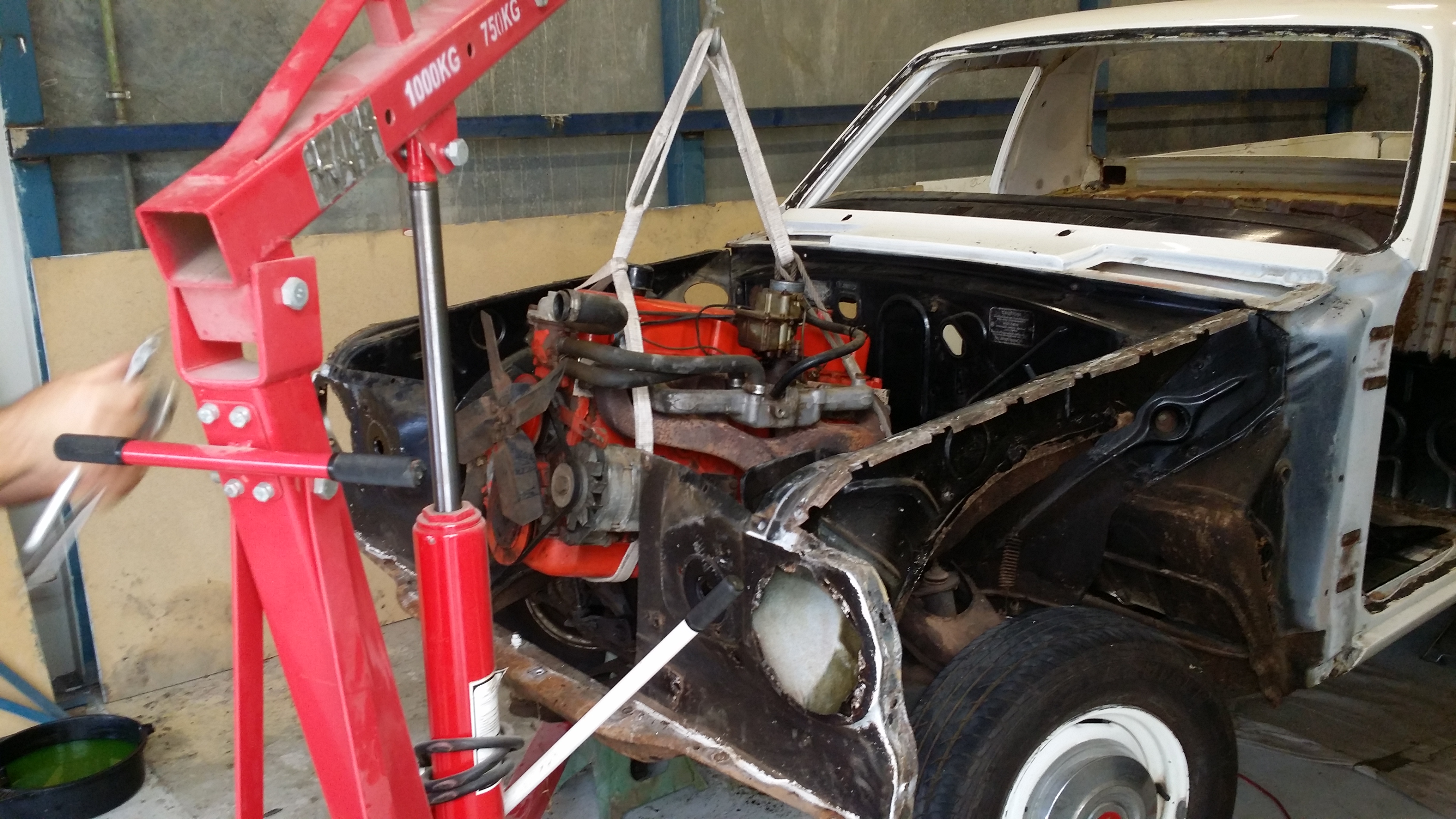
Next we removed all of the mechanical items; engine, gearbox, tail shaft, leaf springs, differential, fuel tank, brake and fuel lines.


Auto-Resto


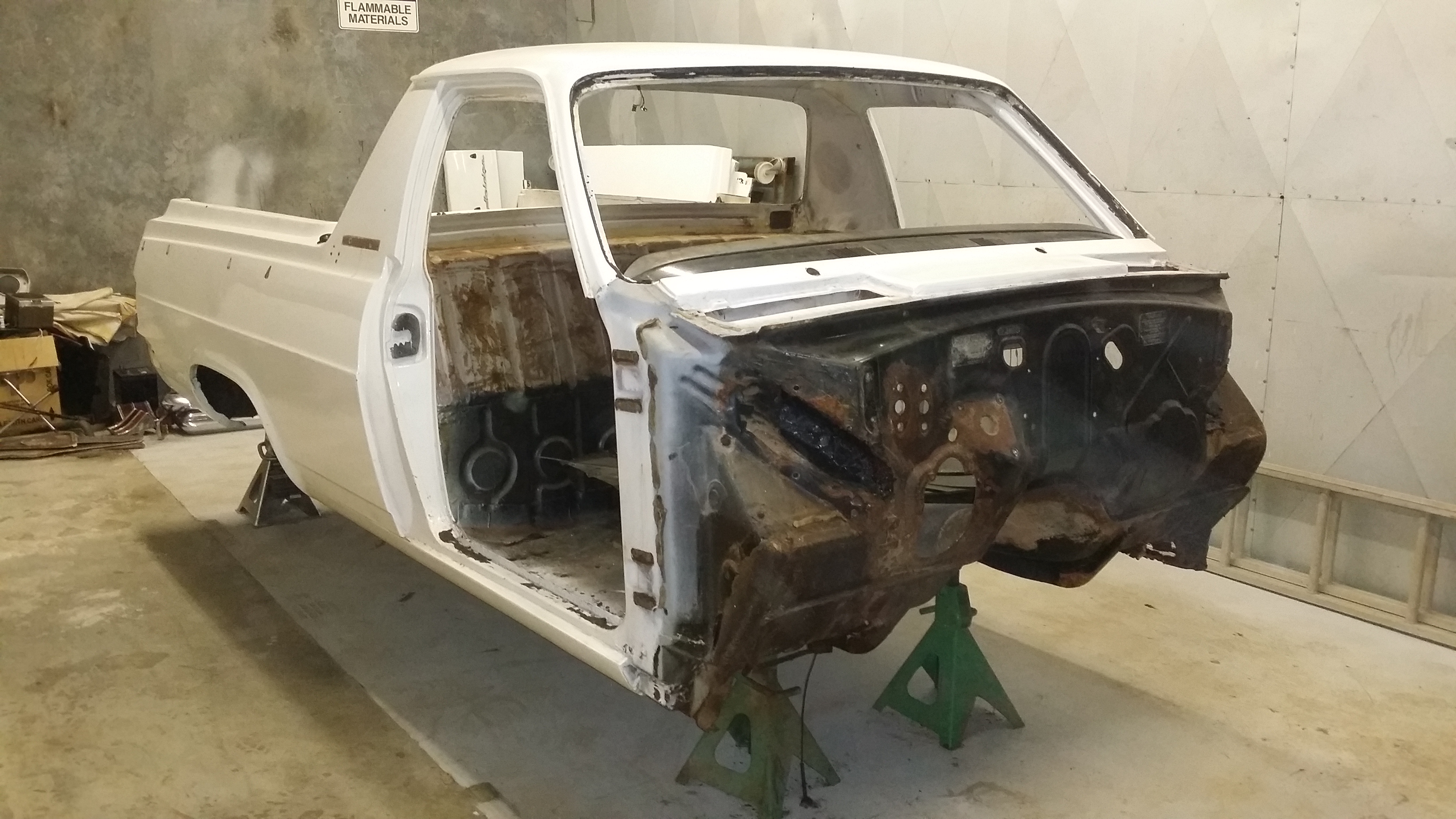
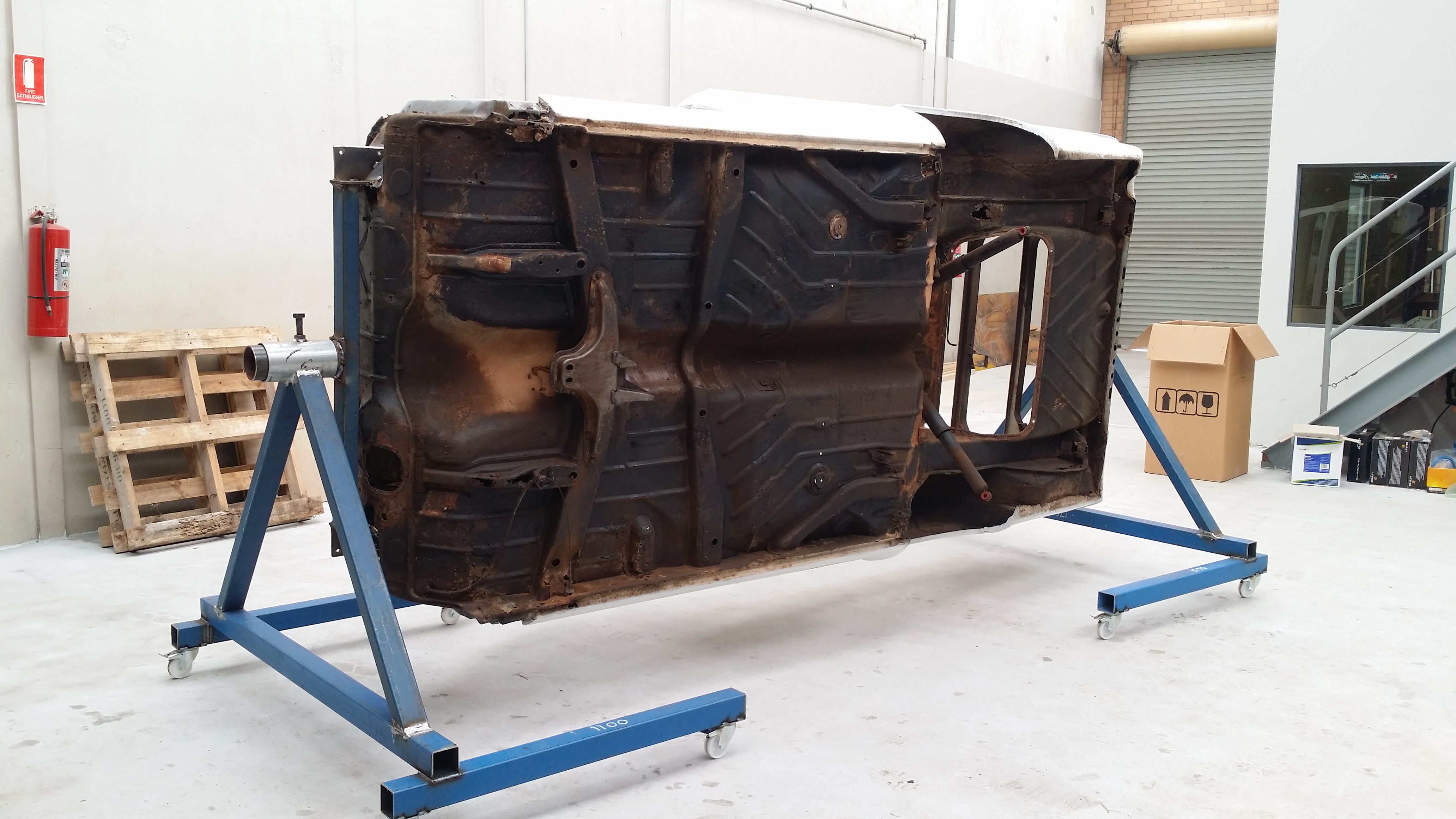
The front sub-frame was then removed and the body was supported by axle stands before mounting onto the vehicle rotisserie.


Vehicle Rotisserie

Auto-Resto


Following the disassembly of the vehicle, we mounted the body on a rotisserie and commenced the assessment of the vehicle.


Auto-Resto

Vehicle Assessment

A preliminary assessment was conducted on the vehicle to re-evaluate the areas of concern. We’ve provided a brief extract of the findings, as continues.

HR-Holden-Ute-rust-repairs-vehicle-restoration-auto-body-building-custom-fabrication-vintage-car-Farrace-restoration-A-Pillar-autoresto.com.au

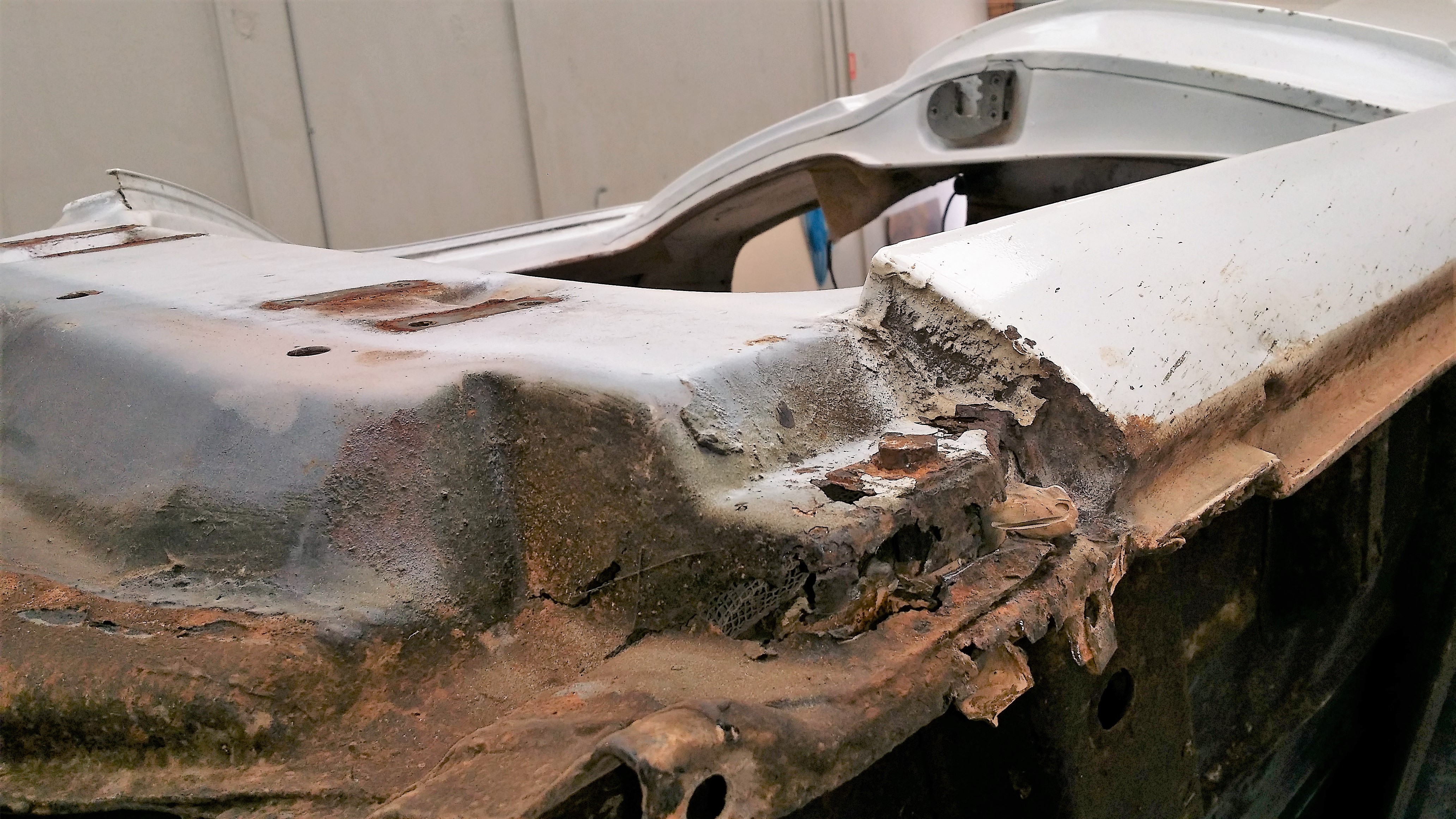
LH A-Pillar (external section)

This photo illustrates the condition of the LH A-Pillar (external section – corrosion).


20180406_140321-1


LH A-Pillar (internal section)

This photo illustrates the sub-standard workmanship performed on the internal section. Fly wire and plastic filler make up the main structure.


found the under-body sub-frame and chassis rail in urgent need of attention.

To be continued….

LX SS Torana


Condition Assessment

Yes this is Ron’s LX SS Torana, as it was in poor condition but full of potential. With a mammoth task ahead, we started by assessing each of the key areas requiring attention and compiling a checklist over 30 items long. After which, each item was further broken down, identifying multiple tasks required to achieve the repairs required. All in all there over one hundred (+) items listed before the restoration begun.

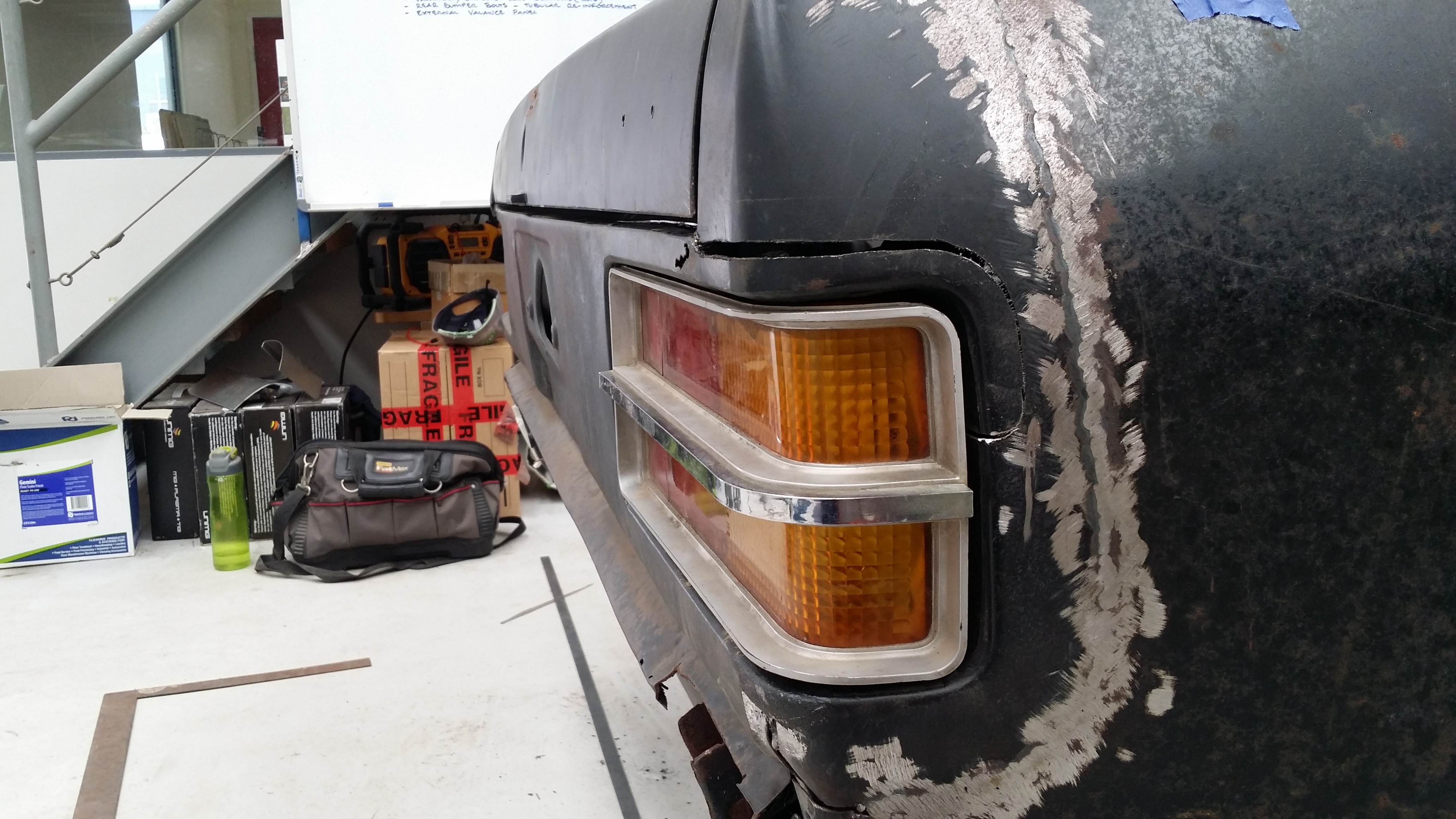
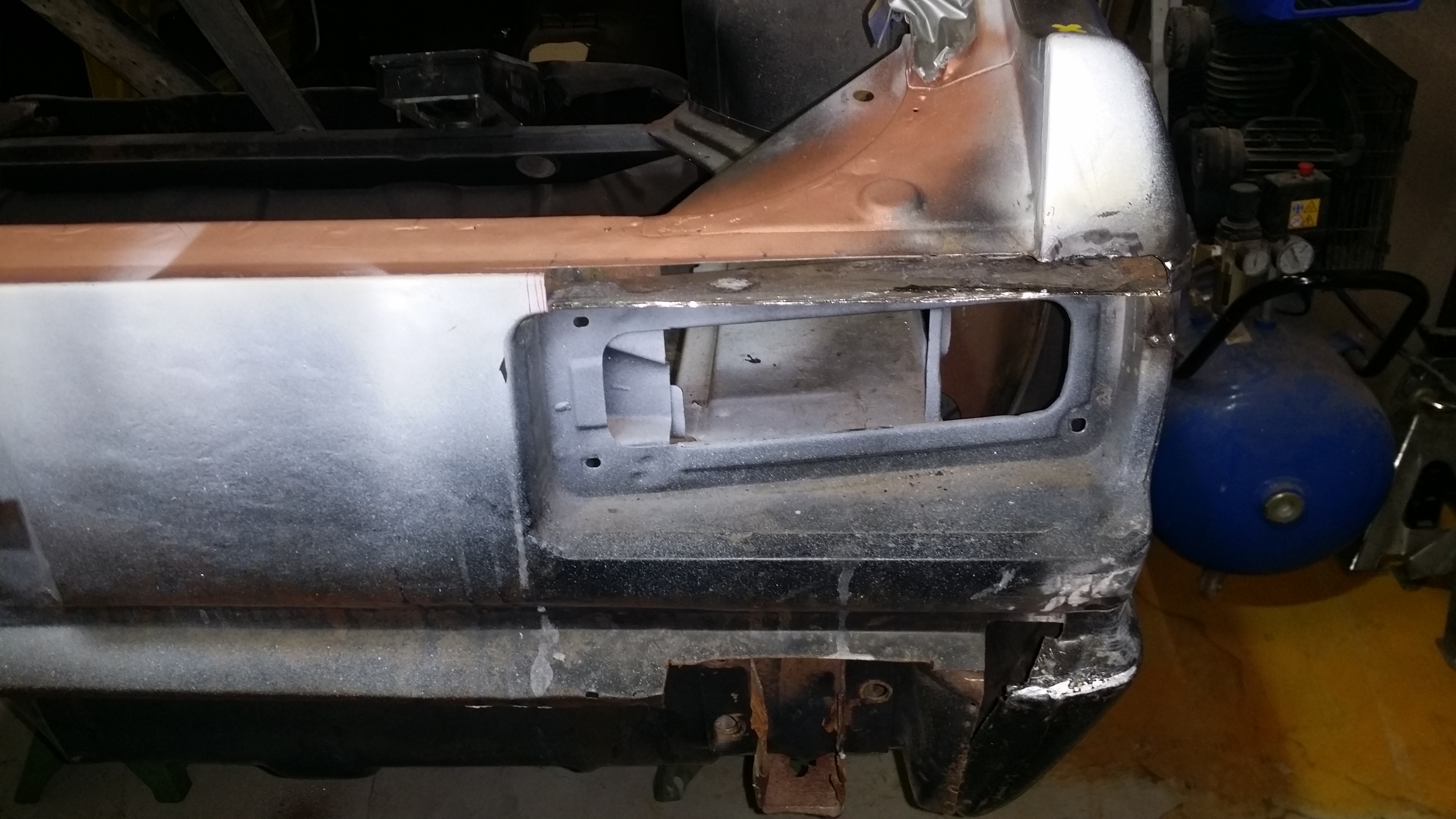
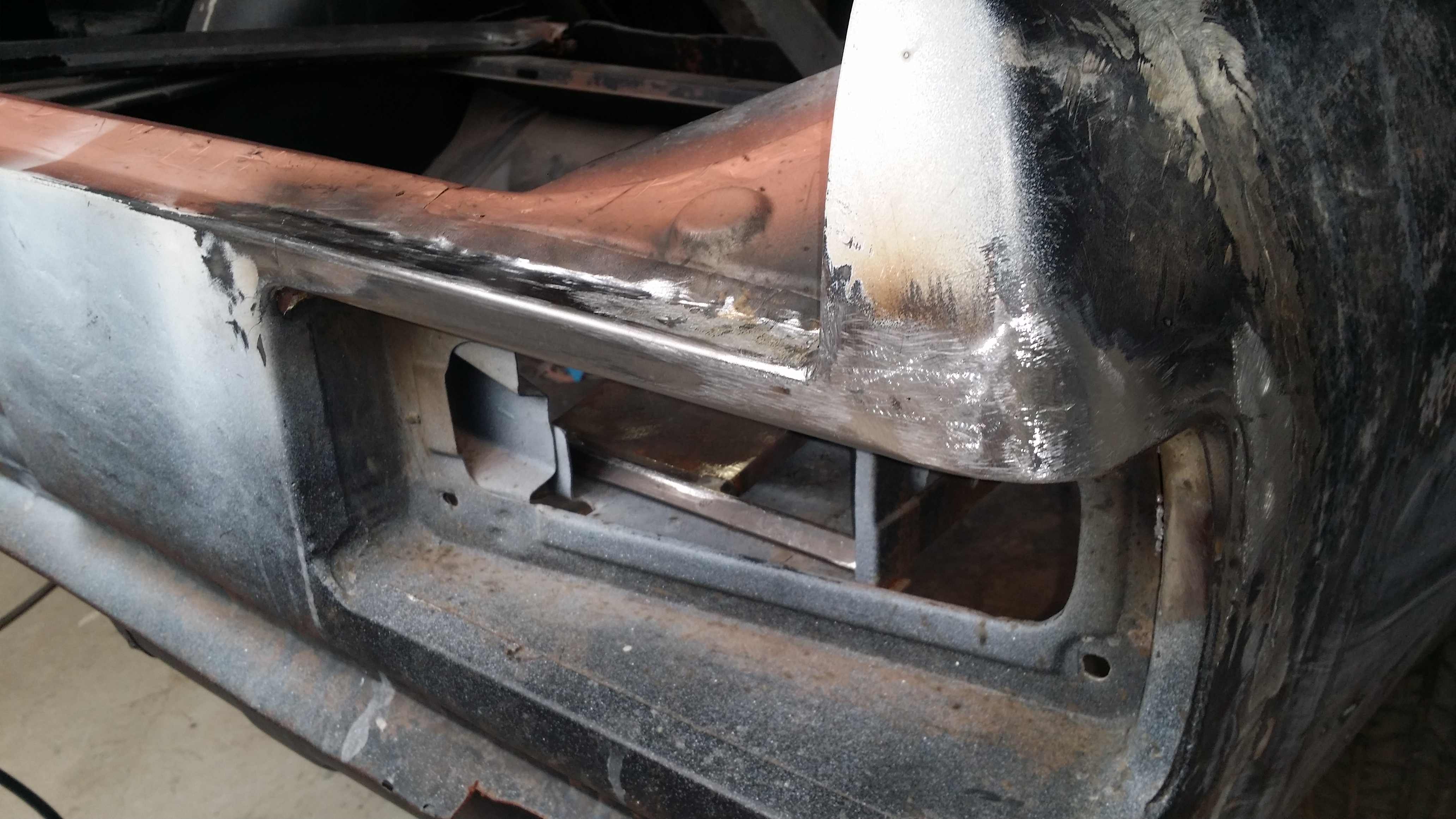
The vehicle was missing a lot of metal, mostly because of the extent of corrosion. The previous repairer removed the right hand rear (RHR) Quarter Panel and lower rear valance panel. The right hand (RH) Rear Bumper fixing tubes and the vertical portion of the chassis rail had also been removed.

The external cover panels of the left hand (LH) & RH C-Pillar sections had already been removed by another repairer. The internal extrusion of the left hand side (LHS) C-Pillar was entirely corroded from the turret to the base of the C-Pillar / Quarter Panel interface point. The LH Rear Window sill was corroded through to the internal section.

Due to the excessive amount of corrosion activity at the LH C-Pillar point, the lower rear quarter panel section became corroded and severely fatigued. The rear turret section (which meets the hatch door) was still intact, but was in desperate need of repair.

The rear beaver panel had corrosion along the top section of the panel, above the both tail-lights and also beneath the rubber seal channel section.

LH Front A-Pillar

The A-Pillar section of any vehicle forms an integral part of the structure. The corrosion damage illustrated in this vehicle has extended beyond the immediately visible areas and into the overlapping structure. This requires each panel to be removed individually (like an onion layer) until a sound metal structure is found.

The A-Pillar section presents another challenge, where it serves to support and align the corresponding panels around it. The complexity of this section is further highlighted when we tied the upper Window Pillar section with the lower A-Pillar.

LHS Fender

(LHS Fender – Repair)

The corrosion damage in the lower rear section of the fender was only visible by a small perforation. At closer inspection of the damage it was identified to be significantly larger than originally estimated.

The lower corrosion damage had been previously repaired with fibre glass and this was concealed by the black primer which was applied after the owner had it sand blasted.

Furthermore the previous rust repair was only performed on the external panel section and the internal section was left without being repaired.

Radiator Support Panel

Following the repair to the lower fender section, we repaired the lower section of the radiator support panel to ensure the correct alignment of the (front-end) body panels. Again the owner supplied a near perfect replacement section which we aligned and fuse welded in position.

LH Rear Quarter Panel

The lower rear section of the left hand quarter panel and the wheel arch had excessive corrosion damage. The cause of the damage was due to the extensive corrosion perforation throughout the internal and external sections of the LHS Rear C-Pillar. The donor section was provided from another vehicle and again in near perfect condition.

LH Rear C-Pillar

This video illustrates the restoration process of the left hand rear (LHR) C-Pillar. As you will see the corrosion damage had penetrated extensively throughout the C-Pillar structure. The process involved removing each layer until we found a solid base to start the repairs.

Each section was individually fabricated and fuse welded to achieve a seamless integration. The only exception was the external C-Pillar cover panel which was purchased by the owner. However, this panel was short of the finish length and required modification to complete the interface joint between the C-Pillar and quarter panel.

The fabrication work was finished the same as it was from the factory and as close possible to the original.

RH Rear Quarter Panel

When the vehicle arrived the RH Rear Quarter Panel had already been removed. There was some panel damage to the RH rear wheel arch which needed attention before the replacement panel could be fitted.

Another issue that presented itself was that the replacement quarter panel that was supplied was not the same model, it was for a UC Torana Hatchback. Nevertheless, we aligned the replacement panel, marked the required section and trimmed away the excess.

LX SS Torana

Prior to welding the quarter panel, we had to repair the wheel tub damage, align the body panels and then trial fit the quarter panel.

Auto Resto

During the trial fitting, it was noted that the hatch tailgate alignment with the beaver panel was out of alignment. This is illustrated by the photo above, the horizontal gap tightens as it meets the vertical point (gap) of the quarter panel.

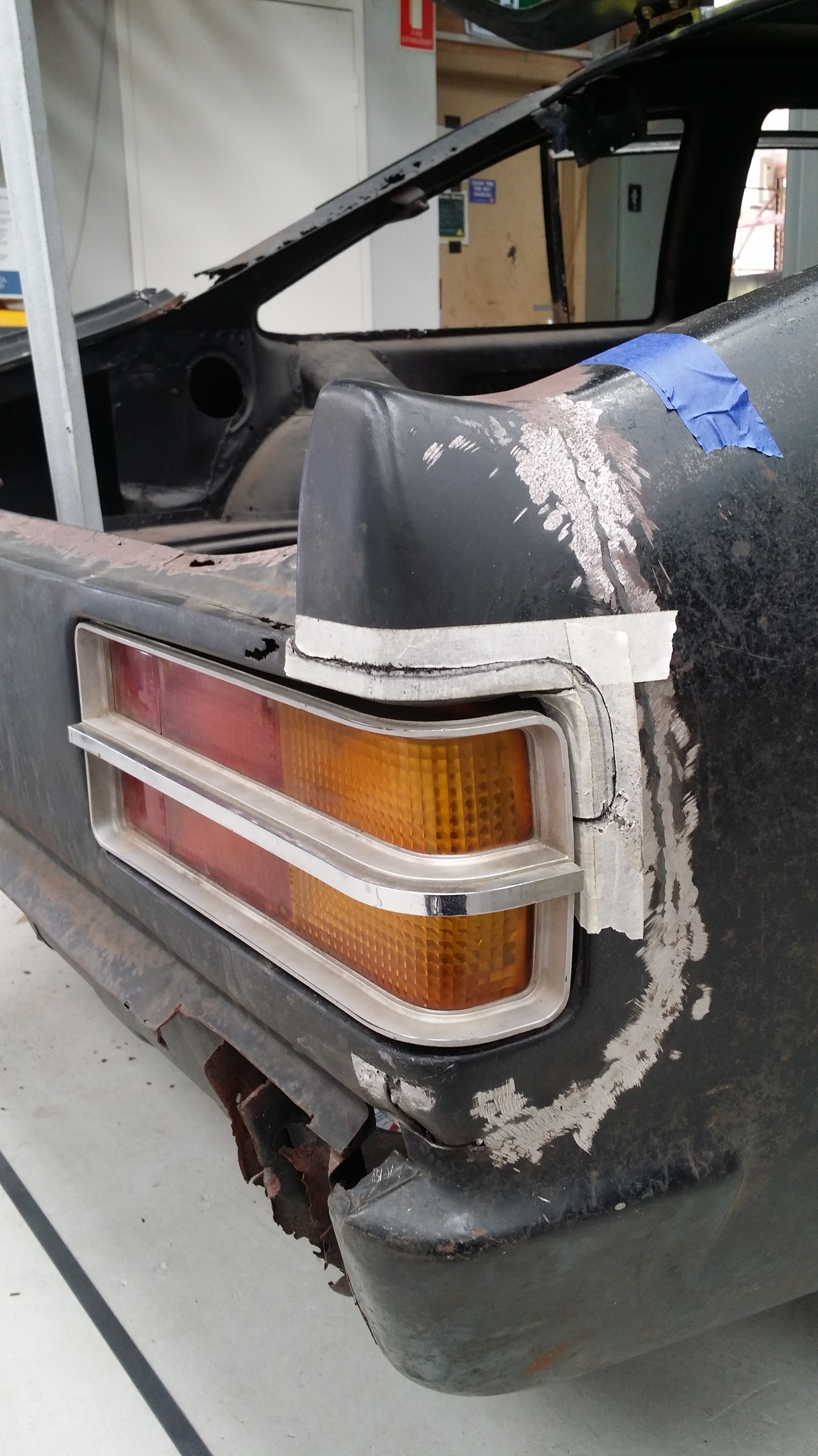
RH Rear Tail-Light & Beaver

LX SS Torana

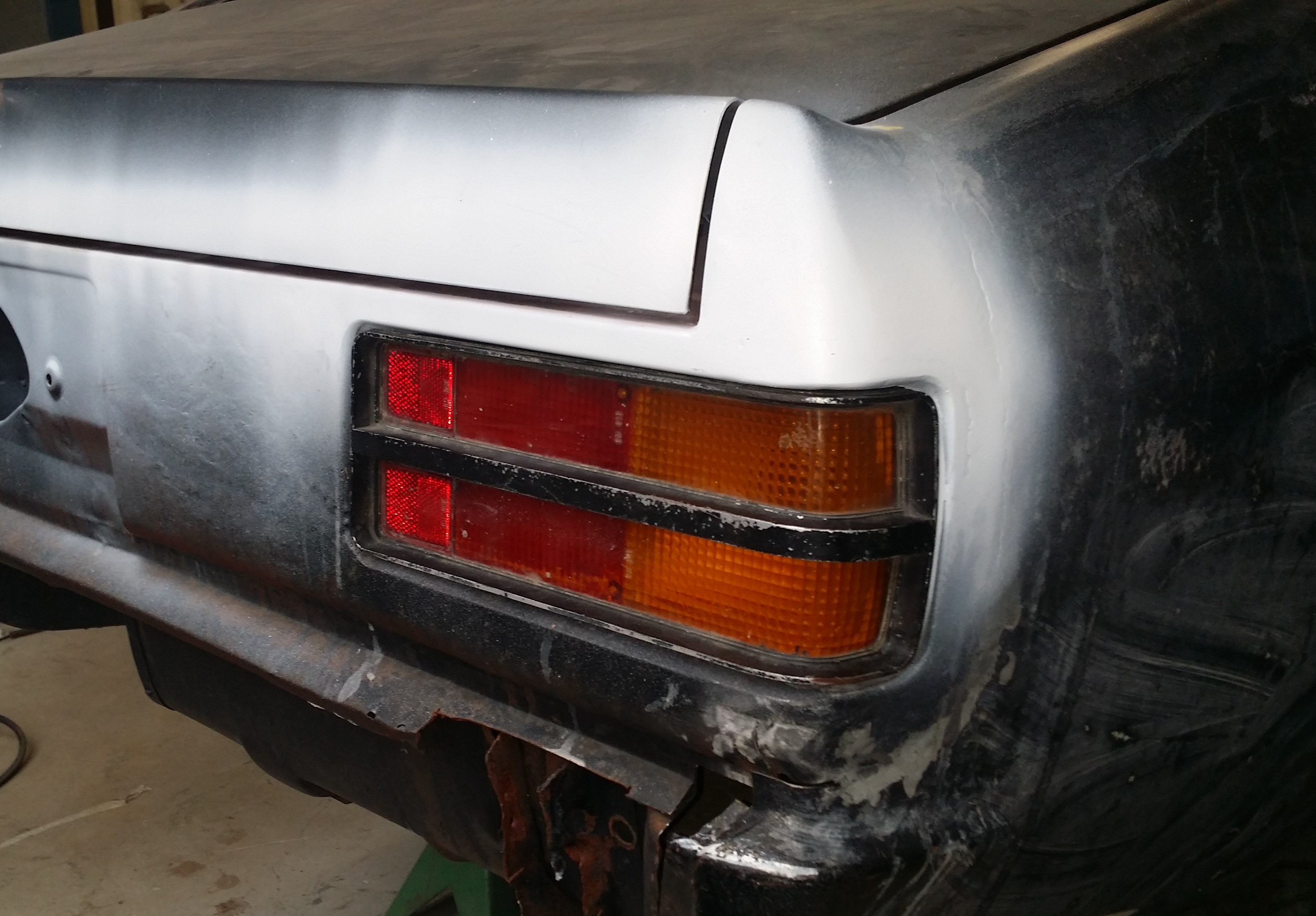
With the RH tail-light fitted, it’s clearly visible that the tail-light aperture is out of alignment. To rectify the excess spacing between the light and the tailgate aperture, Rene split the body section and added approximately 5mm of replacement panel.

Auto Resto

Although the alignment issue was rectified, the panel section above the RH tail-light still had to be replaced because of corrosion fatigue.

Auto Resto

Rene Farrace fabricated the replacement panel and removed the damaged area.

Auto Resto

The replacement section was fused welded and metal finished.

LX-SS-Torana-RHR-Tail-Light-repair-beaver-panel-correction-hatch-gap-tail-light-correction-rust-repairs-restoration
LX SS Torana

The end result illustrates a uniform hatch panel gap and the correct alignment of the tail-light. This concludes the repairs and replacement of the RH Rear Quarter Panel.

LH Rear Tail-Light & Beaver


To be continued…….

Mazda RX7 – Hinge Restoration

Copyrights © 2017 autoresto.com.au

INTRODUCTION
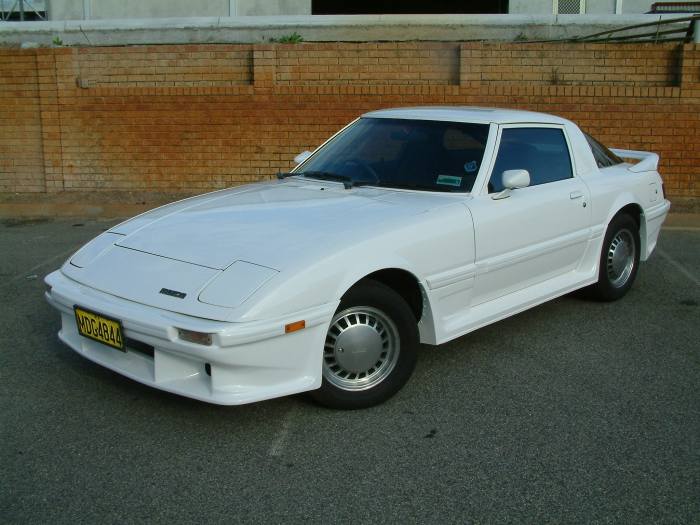
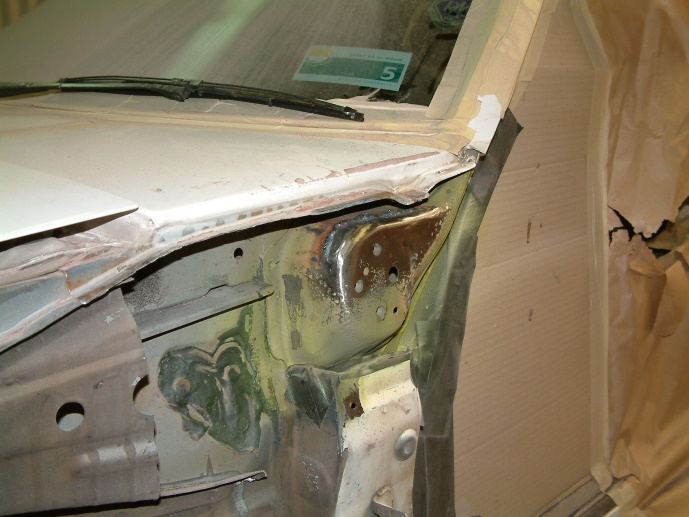
The owner of this Mazda RX7 was concerned that the structural integrity of the vehicle’s A-pillars was compromised by the visible corrosion damage around the upper hinges. The difficulty in evaluating this type of issue is that the problem is not completely exposed until the area is opened up to expose the internal structure.
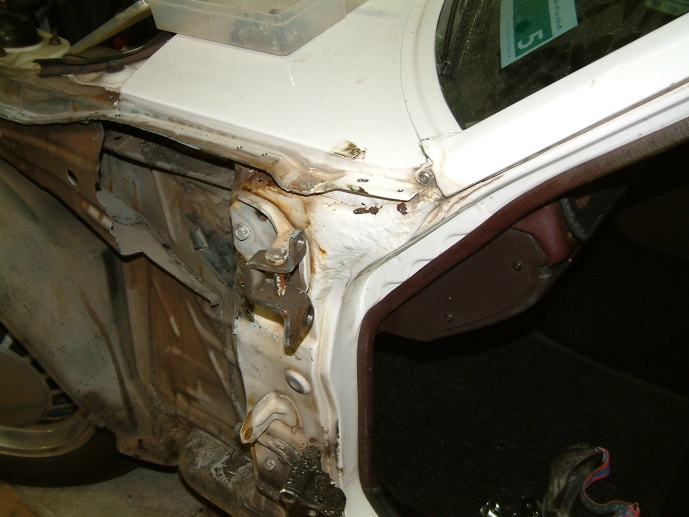
Upon the initial inspection and appraisal, it was identified that the upper hinge fixture point on each side were indeed corrosion fatigued. The doors were dropping when opened and the owner had to lift the rear section of the door to close them. This was placing excess strain on the door handles and it was damaging the paint on the sill and quarter panels.
IDENTIFICATION

RX7-1


The initial objective was to remove the doors and fenders to gain access to the problem and ascertain the extent of the damage.


RX7-2


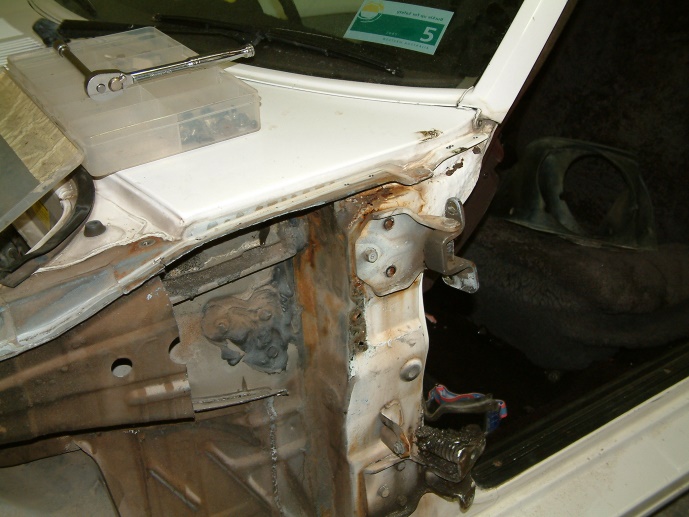
The RHF skirt reinforcing beneath the fender was removed to expose the complete pillar section and allow ease of access and repair of the damaged area.


RX7-3


Next the external A-pillar (top hinge) cover panel was removed to expose the full extent of the corrosion damage to the internal hinge (fixture point) reinforcement structure.

Now given these circumstances it’s prudent to further investigate other factors that may have contributed to the issue (ie window, plenum chamber, drip rail or turret perforation) and rectify these causes to eliminate the risk of re-occurrence.

After eliminating the probable causes, the actual issue was identified to be condensation ingress between the external panel skin and the pillar hinge reinforcement.

RX7-4

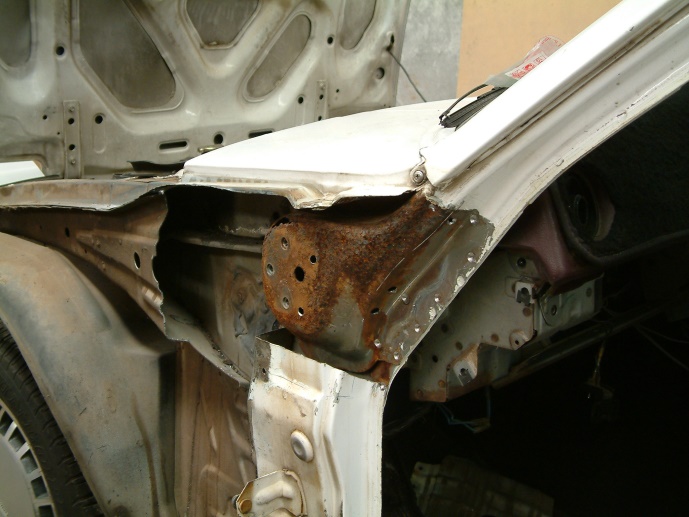
The extent of the corrosion pitting was concentrated to the external surface of the internal hinge fixture reinforcement panel. Although mostly superficial, the upper section had perforated substantially and the fatigued is clearly visible after the sandblasting process.


RECTIFICATION
Now that the internal hinge reinforcement structure is exposed, the next step in the process was to sandblast the corrosion effected area, identify the extent of the corrosion damage and rectify the structural integrity.

RX7-5


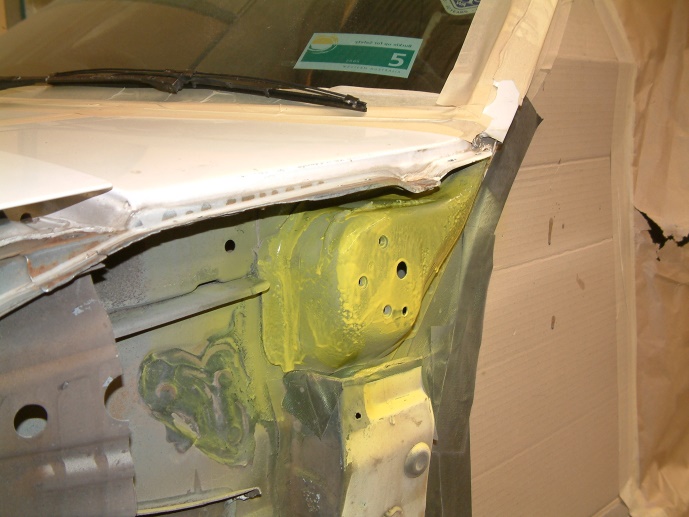
After the sandblasting process, the areas are etch primed to seal the exposed metal from the elements and then the subsequent repair work can commence.


RX7-6


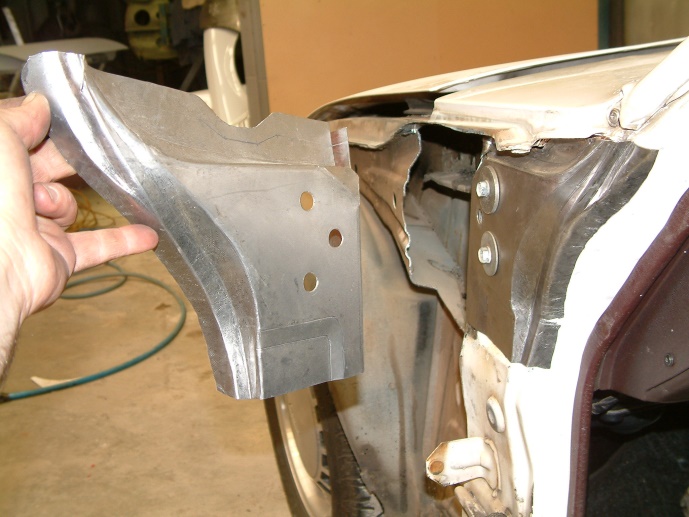
The internal hinge reinforcement structure damage was sized and a duplicate steel plate was fabricated to suit the area.


RX7-7


The weakened corroded section was cut out (completely removed) and the duplicate steel plates were fuse welded into position.

RX7-8


The corrosion repair area was sandblasted again and etch primed for atmospheric protection.


RX7-9


Next the external A-pillar top hinge panel needed to be duplicated and welded in place. An exact replica was fabricated by René Farrace, then it was fitted and fuse welded into the correct position.

RX7-10


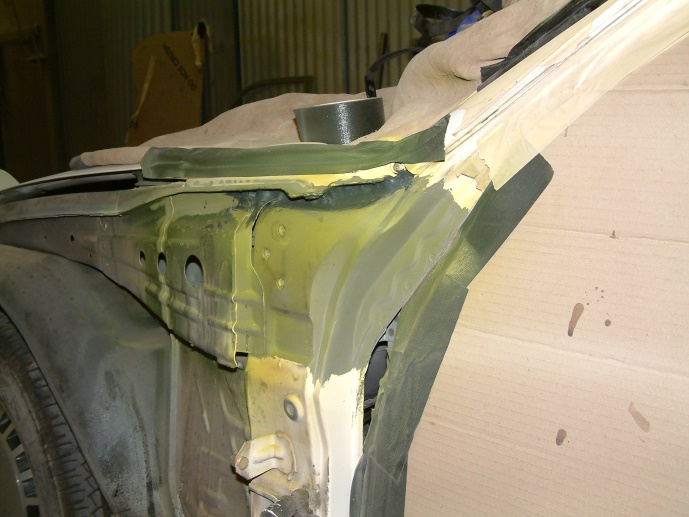
Again the corrosion repair area was sandblasted and etch primed.
The front skirt reinforcement panel was then fitted and welded to complete the structural repair.


RECOMMENDATIONS
Please remember that the sequence of repairs will be determined by the extent of the damage. Don’t take shortcuts with structural areas, because in an accident it could be the difference between life and death.

My advice to the DIY’s, is careful planning and attention to detail are the basics required to successfully execute the rectification schedule. Set out with one objective in mind, to do right the first time!

NOTES

Time+Effort=$$$
If time is of the essence, research the availability of a professional with the desired skills to carry out all or part of the repairs. Alternatively, if you’re budget poor but good with your hands, DIY it! I’ve met numerous industry practitioners with either no idea or no inclination to step outside the square. But in times of economic depression they will gladly take your money.
Surface Abrasion
Sandblasting is a must do! Do not compromise this step by wire brushing as this will only polish the surface or grinding as this will miss the crevices and pits of corrosion. Sealing exposed metal is equally as important especially as the repair will take time and atmospheric conditions change seasonally. The pitfall of using a media like Garnet is that it will break down into fine particles and find its way into the isolation of extruded sections. You owe it to yourself to make every effort to remove all or as much of this media as possible or risk creating another issue.
Primary Sealer
When sealing the repairs use compatible materials from the base to top coat finish. Too many times I have seen it before where incompatible products have been used and are mixed together. Although the underlying problem is not instantly visible, over time it will give you grief.

By René Farrace

Auto Resto